TL;DR: A standalone furnace tune-up in Corona, CA typically costs $90 to $200, depending on the furnace’s age, how accessible it is, and whether the technician finds anything beyond normal wear. A proper visit covers burner and ignition inspection, flame sensor cleaning, a visual heat exchanger check, a carbon monoxide test, filter service, and blower inspection. Because Corona’s mild winters mean furnaces run only a few months a year, one visit before the heating season gets going is usually enough.
If your furnace just kicked back on for the season and you’re trying to figure out what a tune-up should cost before you book one, here’s the short version: a routine maintenance visit in the Corona area lands in the $90 to $200 range, and what’s actually done during that hour matters more than the number on the invoice. Some visits are a quick filter swap and a glance at the burners. Others are a real diagnostic pass that catches a cracked heat exchanger or a failing flame sensor before it strands you on a 40-degree morning. Here’s how to tell the difference.
How much does furnace maintenance cost in Corona, CA?
A single furnace tune-up in Corona typically runs $90 to $200 as a standalone visit, separate from any repair work the technician recommends afterward. That range covers one gas furnace with normal access, usually in a garage, hallway closet, or attic.
What pushes a visit toward the higher end: an attic-mounted unit that needs a ladder and confined-space work, a furnace that hasn’t been serviced in several years and needs extra cleaning, or a home where the technician also checks the paired air conditioning system’s coil and refrigerant levels in the same trip. Many Corona homeowners bundle the furnace check with an AC check in spring or fall since the two systems usually share the same air handler and ductwork.
What a tune-up does NOT include: parts. If the technician finds a cracked heat exchanger, a corroded flame sensor, or a failed inducer motor, that’s a separate repair quote. A fair technician will write that quote up in detail and explain exactly what’s wrong before doing any work beyond the inspection. For what those common furnace repairs run on their own, see our furnace repair cost guide for Corona.
What does a furnace tune-up actually include?
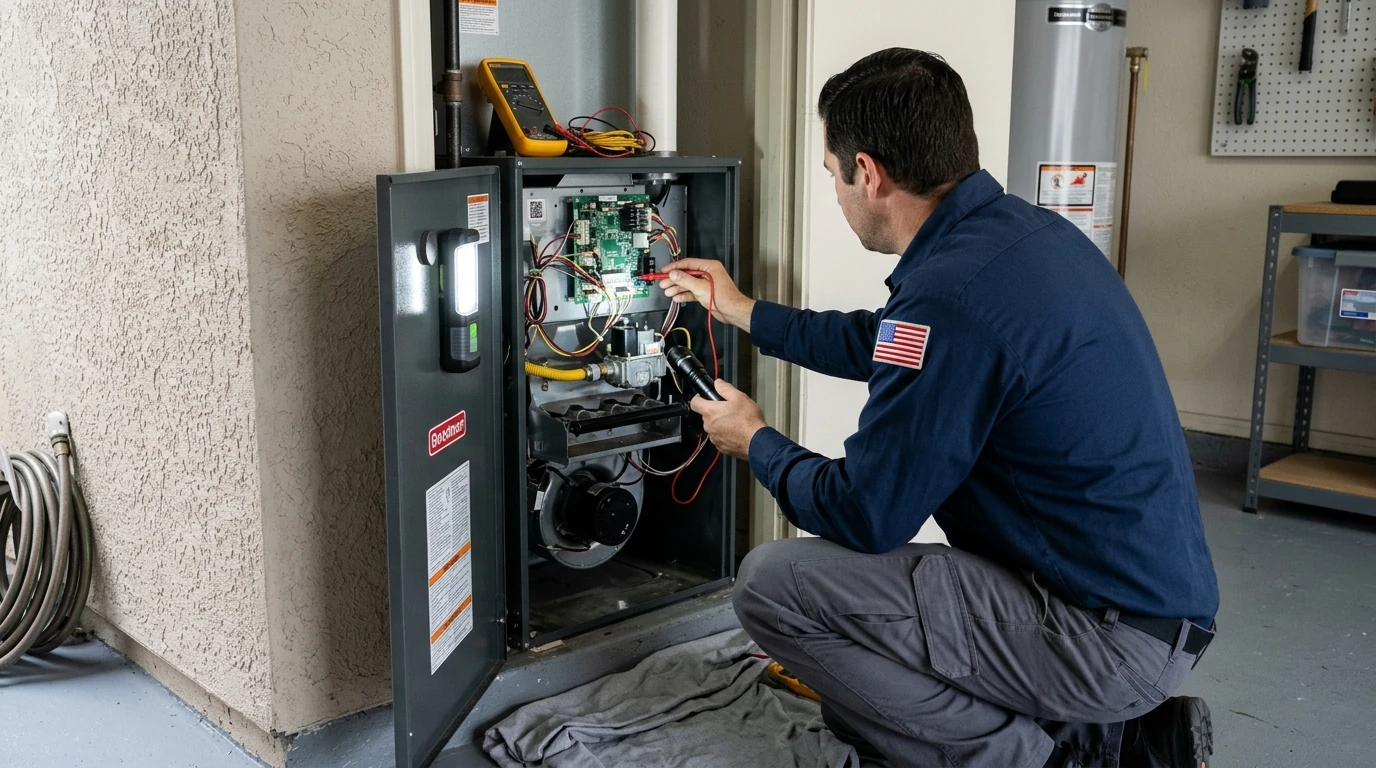
A real furnace tune-up is a specific checklist, not just “we looked at it.” At minimum, it should cover:
- Burner inspection and cleaning. Dirty or misaligned burners burn unevenly and waste gas.
- Flame sensor check. This small rod tells the furnace a flame is actually present. A corroded sensor is one of the most common reasons furnaces shut down mid-cycle.
- Visual heat exchanger inspection. The technician looks for cracks, rust-through, or separated seams. A cracked heat exchanger can let combustion gases leak into the air stream, which is why this step matters.
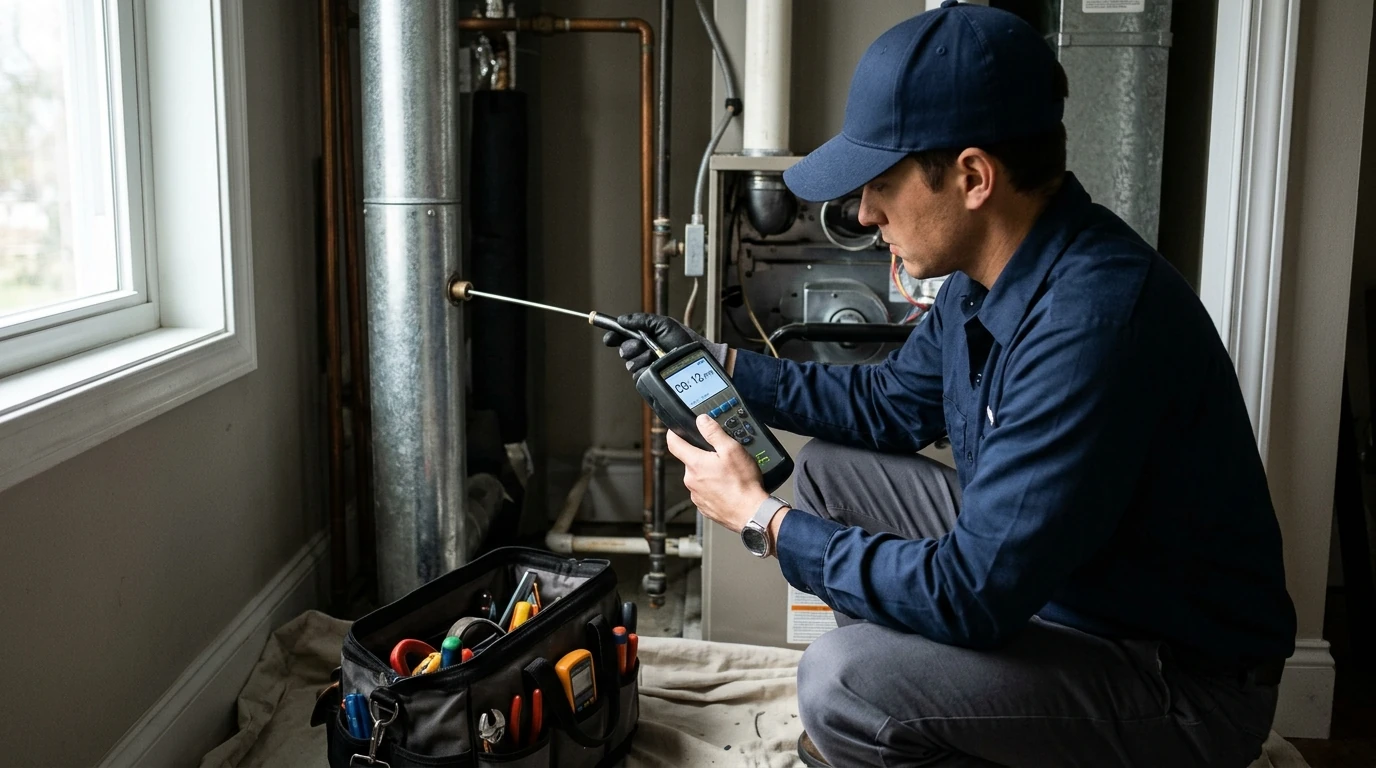
- Carbon monoxide test. The technician checks CO levels in the flue and in the living space, comparing readings against the furnace’s rated specification. Ambient CO in the home should read at or near zero.
- Filter check and replacement. A clogged filter restricts airflow, makes the blower work harder, and can shorten the furnace’s life.
- Blower motor and belt inspection, including amp draw and any unusual noise.
- Ignition system test (standing pilot, hot surface igniter, or intermittent pilot, depending on the furnace’s age).
- Thermostat calibration, confirming the set temperature matches what the furnace is actually delivering.
If a technician’s visit skips the CO test or the heat exchanger inspection, that’s not a full tune-up, regardless of what it’s called on the invoice.
How often should you service a furnace in Corona’s mild climate?
Once a year, before the heating season starts, is enough for most Corona homes. Unlike colder climates where a furnace might run most of the day for five months straight, Corona furnaces typically only see heavy use from late November through February.
That lighter duty cycle doesn’t mean skip maintenance altogether. A furnace that sits idle for seven or eight months a year in a garage or attic often collects dust, and in some cases rodents nest near warm components over the summer in homes throughout Corona, Eastvale, and Norco. The first cold snap is the worst time to find out something built a nest in the blower housing. Scheduling the tune-up now, before the next stretch of cold mornings, means any issue gets caught on your schedule instead of an emergency call.
Homes with older furnaces (15+ years) or units installed in attics benefit from a slightly closer look each visit, since those furnaces have more wear on ignition components and the heat exchanger has had more cycles.
When does a tune-up turn into a repair?
A tune-up becomes a repair conversation whenever the technician finds a component that’s worn, cracked, or out of manufacturer spec, most often the flame sensor, the igniter, or the heat exchanger. These findings are documented with a written quote before any repair work starts, not added to the bill after the fact.
The carbon monoxide test is the one item on this list that’s a genuine safety check rather than a wear item. If a technician finds elevated CO readings tied to a cracked heat exchanger, the standard, responsible response is to shut the furnace down until it’s repaired or replaced, not to patch it and move on. This isn’t meant to be alarming: it’s a routine part of why the CO test exists, and most furnaces never have this problem. It’s also why skipping the CO check to save a few minutes defeats the purpose of the visit.
If your technician comes back with a repair estimate that’s a large percentage of what a new furnace would cost, it’s worth reading our guide on furnace repair or replace decisions before approving anything.
What should you do next?
If your furnace hasn’t been serviced in the last year, schedule a tune-up now rather than waiting for the first cold week to reveal a problem. A documented annual maintenance visit also matters for warranty purposes: many furnace manufacturers require proof of annual service to keep parts warranties valid, which the ENERGY STAR furnace program outlines as a standard efficiency-and-longevity practice.
When you call around for quotes, ask what’s included in the price, specifically whether the CO test and heat exchanger inspection are part of the standard visit or an upcharge. You can also verify any contractor’s California license status directly through the CSLB license lookup tool before scheduling.
Call RT Olson Plumbing, Heating and Air Conditioning at (951) 344-5596 to schedule a furnace tune-up before the next cold stretch hits, or request a visit through our furnace repair page.
A tune-up is a small, predictable cost next to an unplanned furnace failure on a cold morning, and it’s the one maintenance visit that doubles as a safety check.
About RT Olson Plumbing, Heating and Air Conditioning
This guide was prepared with the RT Olson Plumbing, Heating and Air Conditioning team, led by Bob Olson. RT Olson is a California-licensed contractor (license #997337), founded in 2014 and operating from offices in Corona, CA and Anaheim, CA, serving Corona, Riverside, Anaheim, Santa Ana, Fullerton, Ontario, and surrounding Inland Empire and Orange County communities. The company holds a 4.9 Google rating across 627 reviews and answers calls 24/7.