Drain Cleaning in Corona
Trusted drain cleaning in Corona and surrounding areas. Licensed and insured plumbing and HVAC pros, upfront pricing, free estimates. Call (951) 344-5596.
That slow-draining kitchen sink you’ve been ignoring for two weeks? By the time water is pooling around your feet in the shower or backing up into the other basin, the clog has usually been building for months, grease layering onto grease, hair binding to soap scum, or tree roots threading deeper into a clay sewer lateral. Drain cleaning isn’t a quick plunger fix at that stage. It’s a diagnostic and mechanical process that gets the line flowing again and tells you why it stopped.
What drain cleaning actually involves
A clogged drain can live anywhere from the P-trap two inches below your sink basket to the main sewer line sixty feet from your foundation. The equipment changes depending on where the blockage is and what it’s made of.
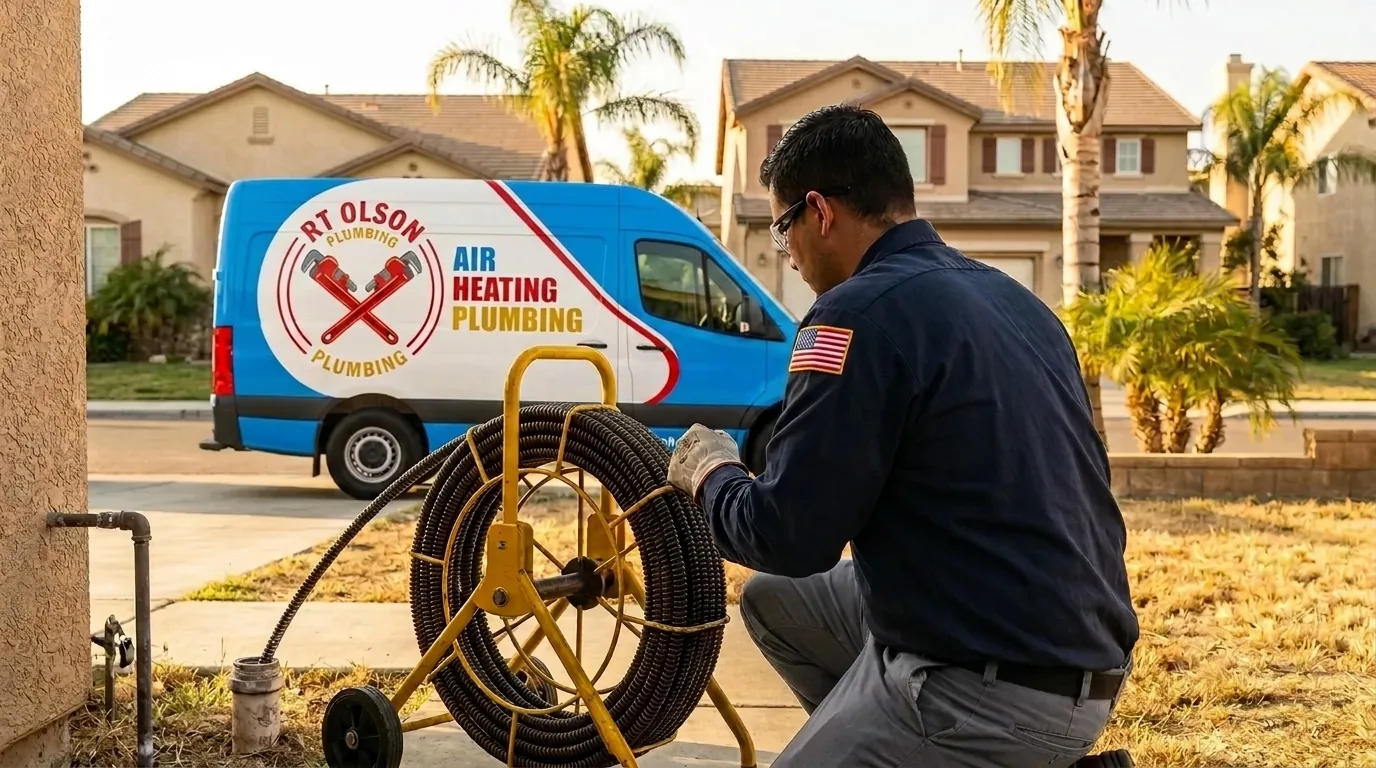
For most kitchen sink clogs, a cable machine (also called a drain snake or rooter) reaches into the line, breaks through the grease cap, and pulls debris back out. For shower drain clogs and bathroom sink clogs, the same approach works, the cable diameter and head type are matched to the pipe size. When a cable clears the line but the drain slows again within days, that’s usually a sign of heavy grease coating, mineral scale, or root intrusion that a cable alone can’t address.
Hydro jetting uses pressurized water, typically 3,000 to 4,000 PSI, to scour pipe walls clean rather than just punching a hole through the clog. It’s the right tool for grease-packed kitchen drain lines, recurring clogs in older cast-iron pipe, and root-infiltrated sewer laterals where you want to flush debris downstream rather than extract it. A camera inspection before hydro jetting confirms the pipe can handle the pressure and shows exactly what you’re dealing with.
Most residential drain cleaning calls wrap up in one to three hours. Main line work or camera inspection adds time but also removes the guesswork.
Our process
-
Diagnose before we clear. We run a brief line assessment, checking which fixtures are affected, whether the backup is isolated or whole-house, and whether there’s any sign of a venting problem or broken pipe, before any equipment goes into the drain. Clearing a line without knowing what’s in it can push a soft blockage deeper or damage a cracked pipe.
-
Match the tool to the blockage. A cable machine handles most hair, soap, and light grease clogs. Hydro jetting is reserved for lines with confirmed grease buildup, recurring blockages, or root intrusion. We don’t upsell hydro jetting when a cable will do the job.
-
Clear the line and verify flow. After the blockage is removed, we run water through the line and confirm drainage rate is normal. If flow is still sluggish after clearing, that points to partial root intrusion, scale buildup, or a belly in the pipe, and we’ll tell you what we found.
-
Camera inspection when warranted. For main sewer lines, recurring kitchen drain clogs, or any situation where we suspect pipe damage, a camera run gives you a visual record of pipe condition. This matters especially in older Corona homes where original cast-iron or Orangeburg sewer laterals may still be in place.
-
Written scope before any additional work. If the inspection reveals a problem that goes beyond cleaning, a root-damaged section, a collapsed lateral, a deteriorated clean-out, we provide a written scope of work before anything else is scheduled.
What separates a good drain cleaning response from a bad one
The most common mistake is treating every clog the same way. A cable machine will punch through a grease clog and restore flow temporarily, but if the pipe walls are coated with a quarter-inch of accumulated grease, common in restaurant-adjacent commercial kitchens but not unusual in residential homes with heavy cooking, the line will clog again within weeks. A thorough operator checks flow rate after clearing, not just whether water moves at all.
On sewer lateral calls, skipping the camera is the other frequent shortcut. Root intrusion in Southern California is heavily associated with older clay and Orangeburg pipe, which is common in Corona neighborhoods built in the 1950s through 1970s. Roots don’t just block, they crack. Clearing roots without knowing pipe condition can temporarily restore flow while leaving a structurally compromised lateral that will fail under the next heavy use.
For hydro jetting specifically, pressure selection matters. Running full pressure through a pipe with existing cracks accelerates the damage. A pre-jetting camera inspection isn’t optional on older pipe, it’s how you avoid turning a cleaning call into an emergency excavation.
Seasonal and regional considerations
Corona’s dry summers concentrate grease and mineral deposits in drain lines that don’t get flushed by regular rainfall. When the wet season arrives, typically late fall through early spring, increased groundwater raises the water table in parts of the Inland Empire, which can push roots more aggressively into sewer laterals seeking moisture. Homeowners in older neighborhoods near the Santa Ana River corridor or with mature trees (eucalyptus and ficus are common culprits) often see root-related backups spike after the first significant rains of the season.
Hard water throughout the Inland Empire also accelerates mineral scale buildup inside drain lines, particularly in homes on well water or older municipal supply lines. Scale narrows the effective pipe diameter over time and makes grease clogs worse.
Service area
RT Olson Plumbing, Heating and Air Conditioning is based in Corona and serves surrounding Inland Empire and Riverside County communities including Norco, Eastvale, Jurupa Valley, Riverside, Chino Hills, and Ontario. City-specific pages for each area link back here for full service detail.
If your drain is backing up, the fastest way to get it cleared is a direct call to (951) 344-5596, available 24/7, license #997337. Tell us which fixture is affected and whether it’s a single drain or a whole-house backup, and we’ll send the right equipment.
Services We Handle
- Drain & Rooter
- Rooter
- Toilet Clogs
- Unclog Drain
Frequently Asked Questions
Does homeowners insurance cover drain cleaning?
What's the difference between a drain snake and hydro jetting, and how do I know which one I need?
How do I know if my slow drain is a simple clog or a sign of a bigger sewer line problem?
Can tree roots really grow into a residential sewer line, and how do I know if that's my problem?
What can I do to slow down grease buildup in my kitchen drain line?
Looking for the best drain cleaning company in Corona?
RT Olson Plumbing, Heating and Air Conditioning provides licensed and insured drain cleaning in Corona, CA and the surrounding area, and has served local property owners since 2014. Customers rate us 4.9 out of 5 stars across 621 Google reviews. We answer calls 24/7 — call (951) 344-5596 for immediate help.
Need Drain Cleaning now?
We respond 24/7 across Corona and surrounding CA cities.
Related Coverage
- Our Plumbing Services, Plus Heating & Air
- Contact RT Olson Plumbing, Heating and Air Conditioning
- Drain Cleaning in Anaheim
- Drain Cleaning in Chino
- Drain Cleaning in Fullerton
- Drain Cleaning in Norco
- Drain Cleaning in Ontario
- Drain Cleaning in Riverside
- Drain Cleaning in Santa Ana
- Drain Cleaning in Yorba Linda
- How To Get Rid Of Drain Flies (And Keep Them From Coming Back)
- Chemical Drain Cleaners vs Calling a Plumber: What Actually Works
- Hydro Jetting vs Snaking: Which Drain Cleaning Method Do You Need?
- The 4 Best Drain Cleaning Companies in Corona, CA (2026)
- How to Unclog a Shower Drain (And a Slow Bathroom Sink)
- How to Drain a Washing Machine (Manually, Safely, and Without Flooding the Laundry Room)