
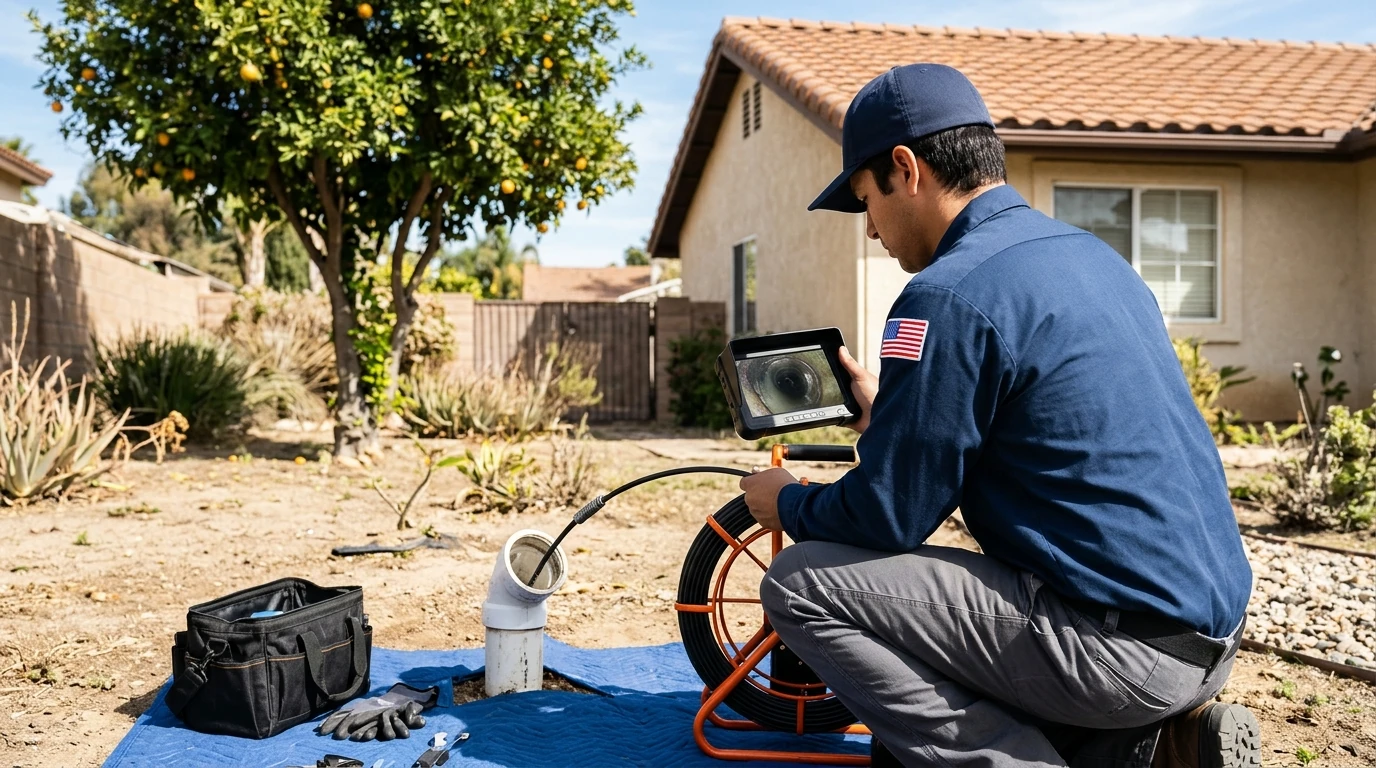
TL;DR: A sewer camera inspection in the Corona, CA area typically costs $150 to $350 for a standard single-family home, depending on pipe length, access point, and whether a written report and video file are included. Home buyers in escrow usually land at the higher end because the report becomes part of the transaction file. The camera is the fastest, cheapest way to confirm whether a line has root intrusion, a belly, or cracked clay pipe before you commit to a repair or a purchase.
If you’re in escrow on an older home near Corona’s original Circle City grid, or your bathroom has backed up twice this year and you’re tired of guessing why, you want to see the pipe, not hear a theory about it. A sewer camera is a waterproof fiber-optic lens on a flexible rod, fed through a cleanout or a pulled toilet flange, that records the full run of pipe in real time. Here’s what that visit costs in Corona and what it’s actually worth paying for.
How much does a sewer camera inspection cost in Corona, CA?
A standalone sewer camera inspection on a typical residential line runs $150 to $350 in the Corona market. That range covers the technician’s time, the camera equipment, and a basic walkthrough of what’s on screen.
What moves you up or down in that range: how far the camera has to travel (a 50-foot line to the street costs less to scope than a 150-foot lateral on a larger lot), whether there’s an existing exterior cleanout or the crew has to access the line through a roof vent or a pulled toilet, and whether you’re asking for a written report with time-stamped footage and a locate (a sonde that pinpoints the exact depth and position of a defect from the surface). Escrow inspections almost always include the locate and the report, since that’s what goes in the buyer’s file.
Before the camera goes in the line, get the scope of work in writing: what’s covered, whether the fee is credited toward follow-up drain cleaning or repair if something turns up, and whether you’ll get the video file. A licensed plumbing contractor should list a C-36 license number on the quote, which you can verify directly through the California Contractors State License Board.
What does a sewer camera inspection actually find?
A sewer camera inspection most often finds root intrusion, a bellied (sagging) section, offset or cracked joints, or scale buildup narrowing the pipe. Each shows up differently on screen and points to a different fix.
Roots enter through tiny gaps at pipe joints, then fan out inside the line as they chase moisture and nutrients, eventually catching paper and grease into a clog. A belly is a low spot where the pipe has settled, usually from soil movement, and it holds standing water and waste even when nothing is actively clogged. Cracked or offset clay is common in homes built before the 1980s, which in Corona includes a lot of the housing stock around the original Circle City core and the older tracts south of the 91, where vitrified clay pipe (VCP) was the standard material and has now had 40 to 60 years for the joints to shift and for mature street trees to find them. If you’ve already had a backup, our guide to who handles a main sewer line clog in Corona walks through the symptoms that usually mean it’s time to scope the line rather than just snake it again.
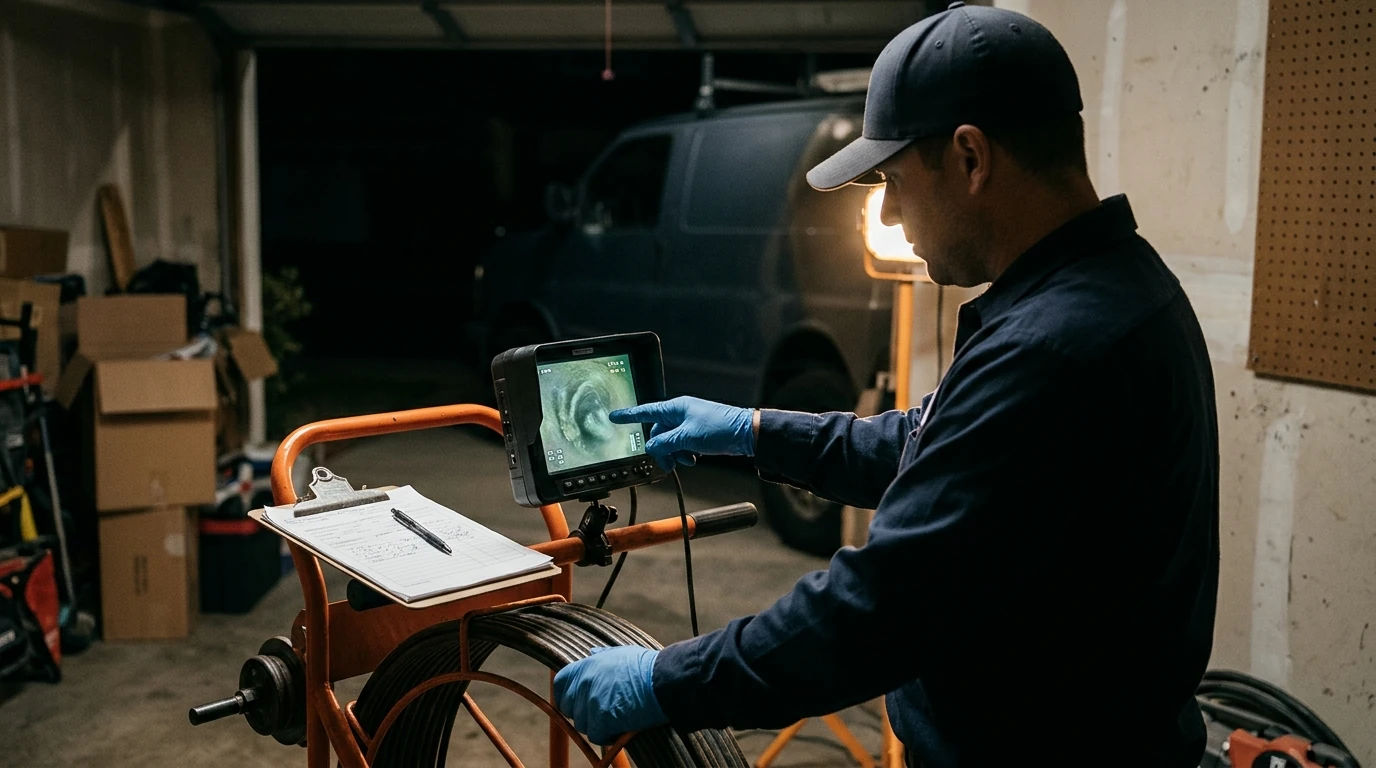
Do you need a sewer scope before buying an older Corona home?
Yes, for most homes built before 1980, a sewer scope is worth the cost before closing. California doesn’t require it as part of a standard sale, which means a seller has no obligation to find or disclose a cracked lateral you’d otherwise inherit.
Newer construction near Dos Lagos or Eagle Glen typically runs PVC laterals, which hold up better and make a scope less urgent, though still cheap insurance on what’s usually the single largest purchase you’ll make that year. Older homes near the downtown grid or in established South Corona neighborhoods are the ones where a $200 camera inspection has saved buyers from a $6,000 to $15,000 surprise after close. If the scope turns up a defect, you have leverage during the inspection contingency to ask the seller for a repair credit or a price adjustment rather than inheriting the line as-is.
What happens after the inspection: repair, monitor, or move on?
What happens next depends entirely on what the camera showed. A clear line needs nothing further. Minor root intrusion usually calls for hydro jetting on a routine schedule rather than an immediate dig. A confirmed crack, a collapsed section, or a significant belly usually means a spot repair or a trenchless lining, not another round of cleaning.
If the footage shows scattered root hairs but an otherwise sound pipe, jetting clears the line and buys time; our breakdown of hydro jetting versus snaking covers which method fits which situation. If the pipe itself is damaged, that’s a drain and sewer repair conversation, and the inspection video is exactly what a contractor uses to scope that job accurately instead of estimating blind. Either way, ask for the defect’s exact footage mark and depth from the report so any contractor you call next is working from the same data, not a second inspection fee.
A sewer camera inspection is the cheapest diagnostic step in the whole process, and it’s the one that keeps every decision after it based on what’s actually in the pipe. If you want one scheduled on a home you’re buying or a line that keeps backing up, call RT Olson Plumbing, Heating and Air Conditioning at (951) 344-5596 and ask for a written quote before anything’s booked.
About RT Olson Plumbing, Heating and Air Conditioning
RT Olson Plumbing, Heating and Air Conditioning is a licensed plumbing and HVAC contractor based in Corona, CA (CSLB license #997337), serving the Inland Empire and North Orange County since 2014. The company holds a 4.9-star Google rating across 621 reviews and runs a 24/7 service line for plumbing, drain, sewer, heating, and air conditioning calls.
Video Transcript
Worried about a hidden sewer problem in your Corona home? A quick camera inspection shows you exactly what’s happening underground. In Corona, a standard sewer camera inspection runs one hundred fifty to three hundred fifty dollars, depending on pipe length and access. Buying a home in escrow? Expect the higher end, since lenders and buyers want a full written report with video footage. The camera travels through your pipes, revealing root intrusion, sagging bellies, or cracked joints before they turn into costly backups. Homes built before 1980 near Corona’s older neighborhoods often have clay pipes that have shifted or cracked over decades. Tree roots sneak through tiny gaps, growing inside the line until they trap paper and grease, causing stubborn clogs. Thinking about buying an older Corona home? A two hundred dollar scope can save you thousands after closing. Newer homes near Dos Lagos often use PVC pipe, which holds up better, but a scope is still smart insurance. If roots are minor, hydro jetting clears the line. A cracked or collapsed pipe may need a repair or trenchless lining. Don’t wait for a bigger problem underground. Call RT Olson Plumbing, Heating and Air Conditioning at (951) 344-5596 for a free estimate.