TL;DR: If a toilet is about to overflow, turn the angle stop valve behind its base clockwise to stop the water supply, then try a flange plunger with a tight seal over the drain hole. If three good plunges don’t clear it, or other drains in the house gurgle when you flush, the clog is likely past the trap and needs a toilet auger or a professional drain line inspection rather than more force.
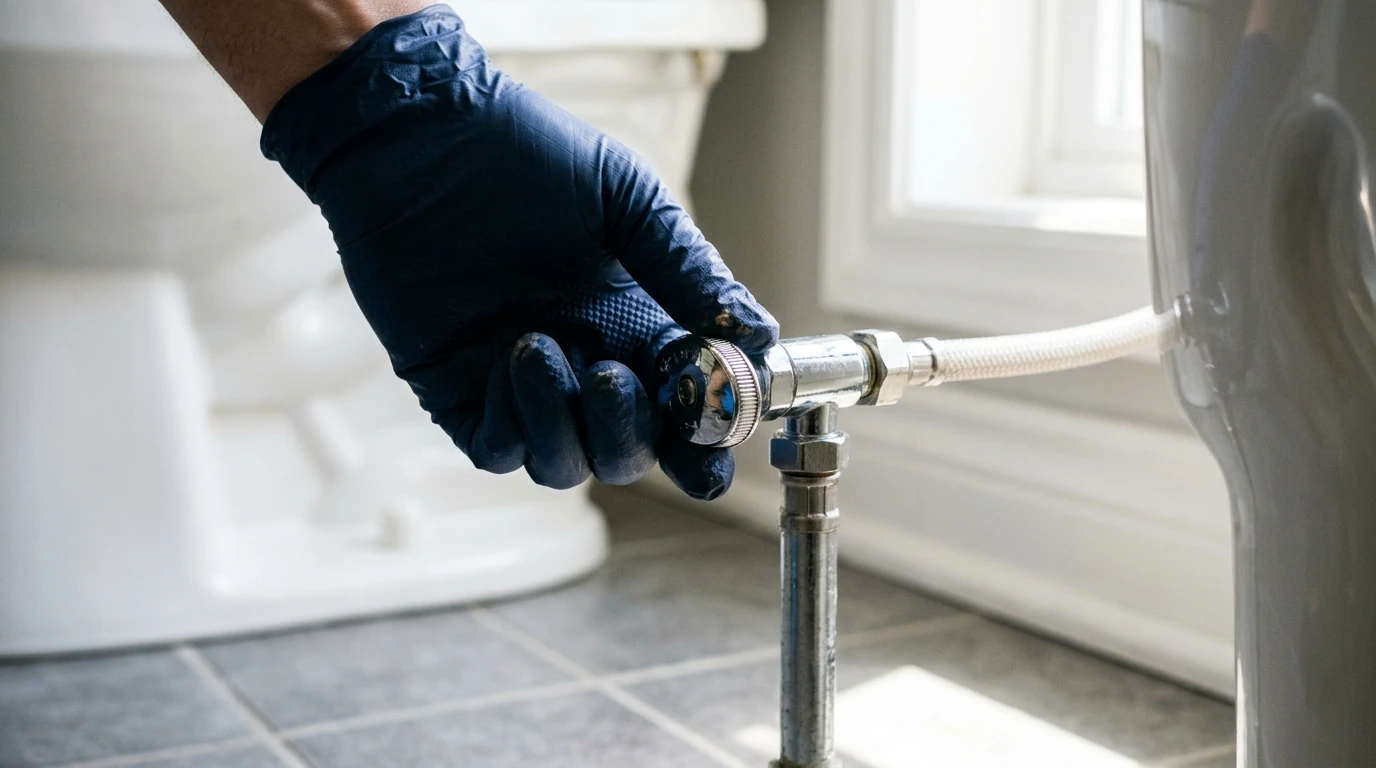
If the bowl is filling and you’re not sure it will stop, you have maybe fifteen seconds before you need to decide between a towel and a wrench. Reach behind the toilet, low on the wall, and find the oval-handled valve on the supply line. Turn it clockwise until it stops. That cuts the water feeding the tank and buys you time to work the clog without worrying about it spilling onto the floor. Once the water stops rising, the rest comes down to whether this is a simple bowl clog or something further down the line.
Is a clogged toilet a plumbing emergency?
A single clogged toilet is usually not an emergency if you have another bathroom in the house and the water has stopped rising. It becomes one when the bowl is actively overflowing, when it’s the only toilet in the home, or when multiple drains back up at the same time.
The difference matters because it changes how fast you need help. A toilet that’s slow to drain after one flush can usually wait for a normal service appointment. A toilet that keeps refilling on its own, or that backs up black or gray water onto the bathroom floor, points to a blockage further down the line and should get looked at the same day.
How do I stop a toilet from overflowing right now?
Shut off the water at the angle stop valve behind the toilet before you do anything else. This is the single most useful step, because it removes the risk of an overflow while you figure out the rest.
If you can’t reach the valve or it’s seized (common on older Corona homes with original 1980s and 90s fixtures), take the lid off the tank and lift the float arm or ball by hand to stop the fill valve from refilling the tank. Hold it until the bowl level drops on its own, then let go slowly. With the water supply controlled, you can test the drain without racing against a rising bowl.
Plunger isn’t working. Auger, PlungeR, or call a plumber?
A flange plunger clears most toilet clogs in two or three good plunges when it forms a tight seal over the drain opening; if it still won’t drain after that, you likely need a toilet auger (also called a closet auger) to reach past the trap, or a plumber if the clog won’t budge for either tool.
A standard cup plunger made for sinks doesn’t seal well in a toilet bowl’s curved opening. A flange plunger has an extra fold of rubber that extends into the drain and seals properly. Push down slowly to force air out first, then plunge firmly several times before breaking the seal to check progress.
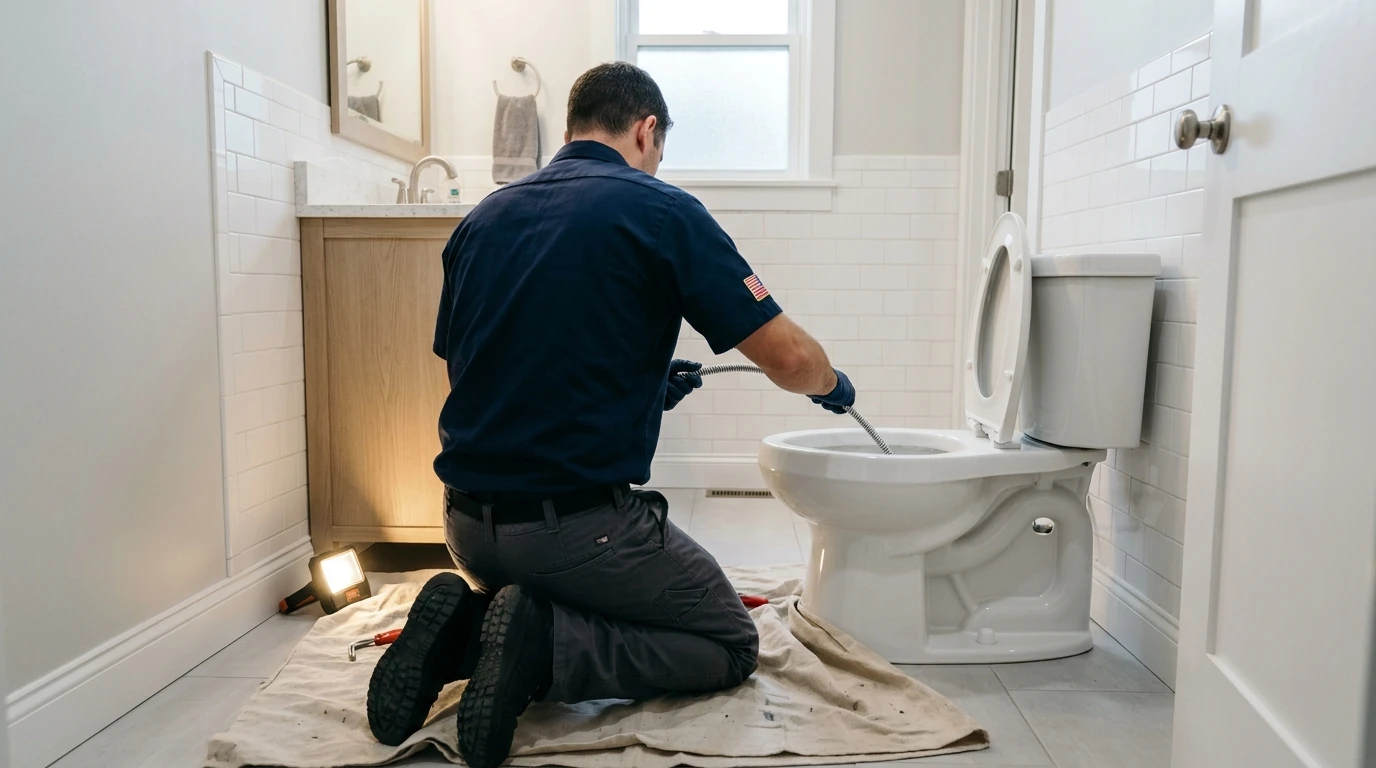
If the water level doesn’t move after three honest attempts, stop plunging. Repeated force against a solid blockage can crack an older porcelain bowl or push the clog into a spot that’s harder to reach. A toilet auger, a flexible cable with a curved tip, is built to go around the trap’s bend without scratching the bowl. If the auger meets resistance you can’t clear, or pulls back wet toilet paper and nothing else even after multiple passes, the blockage is likely in the branch drain beyond where a household auger can reach.
Why is my tub or shower gurgling when I flush the toilet?
Gurgling in another fixture when you flush means air is being pushed back through the drain system, which usually points to a blockage in the shared drain line rather than the toilet itself. That’s a different job than clearing the bowl.
When a toilet, tub, and floor drain all tie into the same branch or main line, a clog downstream traps air that has nowhere to go but back up through the next lowest fixture. If you’re seeing this, plunging the toilet again won’t fix it. Read the full breakdown of main sewer line clogs in Corona for what a camera inspection involves and what it typically costs to clear.
Who do you call for a clogged toilet in Corona?
Call a licensed plumber when a flange plunger and a toilet auger haven’t cleared it, when the only toilet in the house is affected, or when other drains gurgle along with it. Call RT Olson Plumbing, Heating and Air Conditioning at (951) 344-5596 for toilet clogs anywhere in Corona, since the company answers calls 24/7 and can run a cable or camera line the same visit if the blockage sits past the trap.
A same-day visit for a stuck toilet clog typically runs less than an overnight emergency callout. If you’re weighing the cost of calling after hours versus waiting until morning, the emergency plumber cost guide breaks down what drives the price up or down.
Most toilet clogs end with a $20 auger pass. The ones that don’t are worth stopping on rather than forcing, since a cracked bowl or a pushed-in blockage both cost more to fix than the original clog.
About RT Olson Plumbing, Heating and Air Conditioning
This Corona, CA-based contractor has served Inland Empire and Orange County homeowners since 2014 and holds California contractor license #997337, verifiable through the California CSLB. Its technicians handle drain clogs, toilet and fixture repair, and emergency plumbing calls from offices in Corona and Anaheim.