TL;DR: To drain a washing machine manually, shut off the power and the water supply hoses first, then pull the drain hose free from its wall outlet and hold the open end below the water line inside the tub so gravity siphons it into a bucket. If the machine won’t drain at all during a normal cycle, the drain pump or hose almost always has a clog, usually hair, lint, or a small sock, and it needs to be cleared before the washer will run again.
If your washer just stopped mid-cycle and the tub is sitting full of water and soaked clothes, you don’t need to panic or call anyone yet. This is a job most homeowners can handle with a bucket and a few towels. The steps below get the water out safely first, then help you figure out whether the fix is a quick clog clear or something you’ll want a plumber for.
How do you manually drain a washing machine?
Manually draining a washing machine means shutting off power and water, then using gravity to siphon the tub’s contents out through the drain hose into a bucket. It doesn’t require any tools beyond a bucket and a towel.
Start by turning the dial to off and unplugging the cord from the outlet behind the machine. Then shut off both water supply valves, usually a pair of small knobs or levers on the wall behind the washer. If you can’t reach them or they won’t turn, shut off the home’s main water valve instead so nothing keeps feeding the tub while you work.
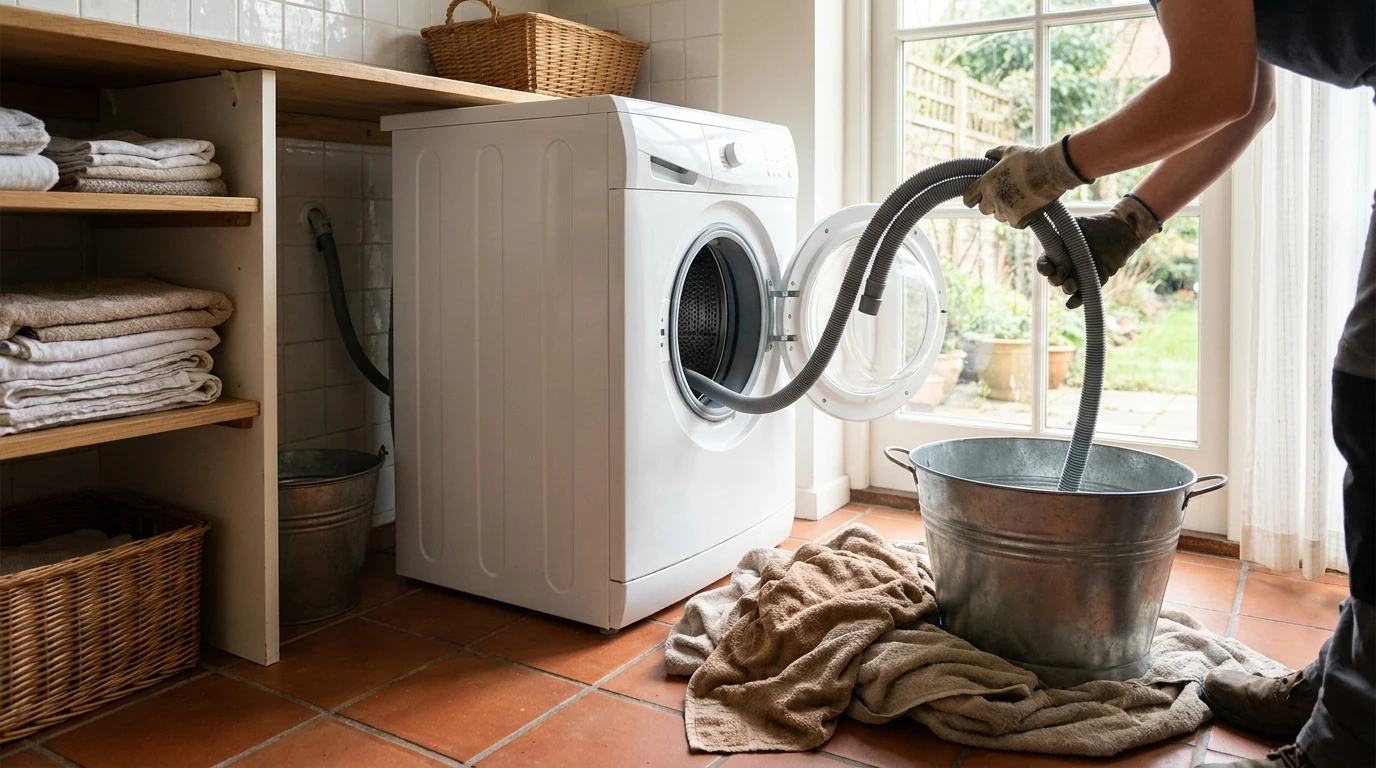
Next, find the drain hose. It’s the black or gray corrugated line running from the back of the machine into a wall standpipe or a floor drain. Gently work it free from the wall opening, but leave it attached to the washer. Hold the loose end above the bucket and lower it below the water level inside the tub. Gravity takes over and water starts flowing out. When the bucket fills, pinch the hose or set the end back up higher to pause the flow, dump the bucket, and repeat until the tub is empty.
How do you empty a washing machine that’s full of water and won’t drain?
A washer that’s stuck full of water almost always has a clog in the drain hose or the drain pump, and manually draining it first is step one no matter what’s causing it. Once the tub is empty, you can actually get at the parts that are blocked.
If the water drained slowly rather than not at all, suspect the hose first. A plumbing snake or a straightened wire hanger can often clear a soft clog near the hose opening. If that doesn’t do it, the pump itself is likely blocked.
Getting to the pump means removing an access panel, on the back of many machines, which can be hard to move while the tub is still full. Check your owner’s manual for the exact pump location since it varies by brand. Once it’s exposed, pry back the spring clamps holding the pump housing and look inside for hair, lint, coins, or (if you’ve got kids) a stray sock. Clear whatever’s jammed, reseat the pump, reattach the hoses, and run a short cycle to confirm it drains normally. If you’re not comfortable taking an appliance apart, this is a reasonable point to call an appliance repair technician rather than force it.
How do you drain a washer if the power is out?
A power outage doesn’t change the manual draining process, since gravity does the work, not the motor. Follow the same steps: water off, hose freed, end lowered below the water line into a bucket. Keep an old towel nearby for drips once the power comes back and the machine runs its first cycle again.
Should you drain a washing machine before moving?
Yes, draining a washing machine before a move keeps residual water out of the drain hose from soaking your moving truck or a neighbor’s floor. Even a washer that’s working fine can hold some residual water in the drain hose after a cycle. A quick manual drain, following the same steps above, keeps the move mess-free.
What’s actually causing the draining problem?
The most common cause of a washer that won’t drain is a clog in the pump or hose, usually hair, lint, or a small object. The second most common cause is detergent buildup: too much soap over time leaves a waxy residue that narrows the hose and eventually blocks it. Use the amount of detergent the machine calls for; if buildup has already formed, you may need to scrape out the residue or flush the hose with water. Less often, the machine itself is the problem: a bad control panel on a newer washer can stop it from draining, and an electrical problem or power surge mid-load can make it stop temporarily.
If you clear the pump and hose and the washer still won’t drain on a follow-up cycle, the problem usually isn’t the appliance at all. It’s the home’s drain line behind the wall. That’s a different repair entirely, and it’s covered in the next section.
Is there a difference between draining a top-load and front-load washing machine?
No, manually draining a top-load and a front-load washer uses the same basic process, since both rely on the same drain hose and pump setup. The one practical difference: keep the door closed on a front loader during the drain, since opening it mid-process lets water spill straight onto the floor instead of staying contained in the tub and hose.
When is it a drain problem instead of a washing machine problem?
It’s a house drain problem, not a washer problem, when the pump and hose are clear but water still backs up, or when other fixtures gurgle when the washer drains. The washer’s standpipe ties into the home’s drain system, and a blockage further down that line will back water up into the washer no matter how clean the pump is.
Watch for these signs: the washer drains fine on its own but backs up when another fixture, like a nearby bathtub or sink, is running at the same time; you hear gurgling from a floor drain or toilet during the wash cycle; or water pools around the standpipe itself instead of draining into it. Any of these point to a clog or a bellied section of pipe in the home’s drain line, which is a job for a sewer camera inspection rather than a screwdriver. We’ve also written about chemical drain cleaners versus calling a plumber if you’re tempted to pour something down the standpipe before the cause is confirmed, which is worth reading first since the wrong product can damage older pipe.
RT Olson Plumbing, Heating and Air Conditioning offers sewer camera inspection and drain cleaning to confirm and clear exactly what’s going on in that line rather than guessing.
If you’ve gone through the pump, the hose, and a test cycle and the washer still backs up, schedule a drain cleaning inspection before you replace parts that aren’t actually broken.
Most washing machine drainage problems end with the pump clear, a short rinse cycle running normal, and the laundry room back in business. Call RT Olson Plumbing, Heating and Air Conditioning at (951) 344-5596 if the backup turns out to be in the house line rather than the appliance.
About RT Olson Plumbing, Heating and Air Conditioning
RT Olson Plumbing, Heating and Air Conditioning has served Corona, CA and the surrounding Inland Empire since 2014, holding California contractor license #997337 (verify any contractor’s license at cslb.ca.gov). The company offers 24/7 service and holds a 4.9-star Google rating across more than 600 reviews. This guide first ran on RT Olson’s previous website and was updated for Corona homeowners in October 2026.