
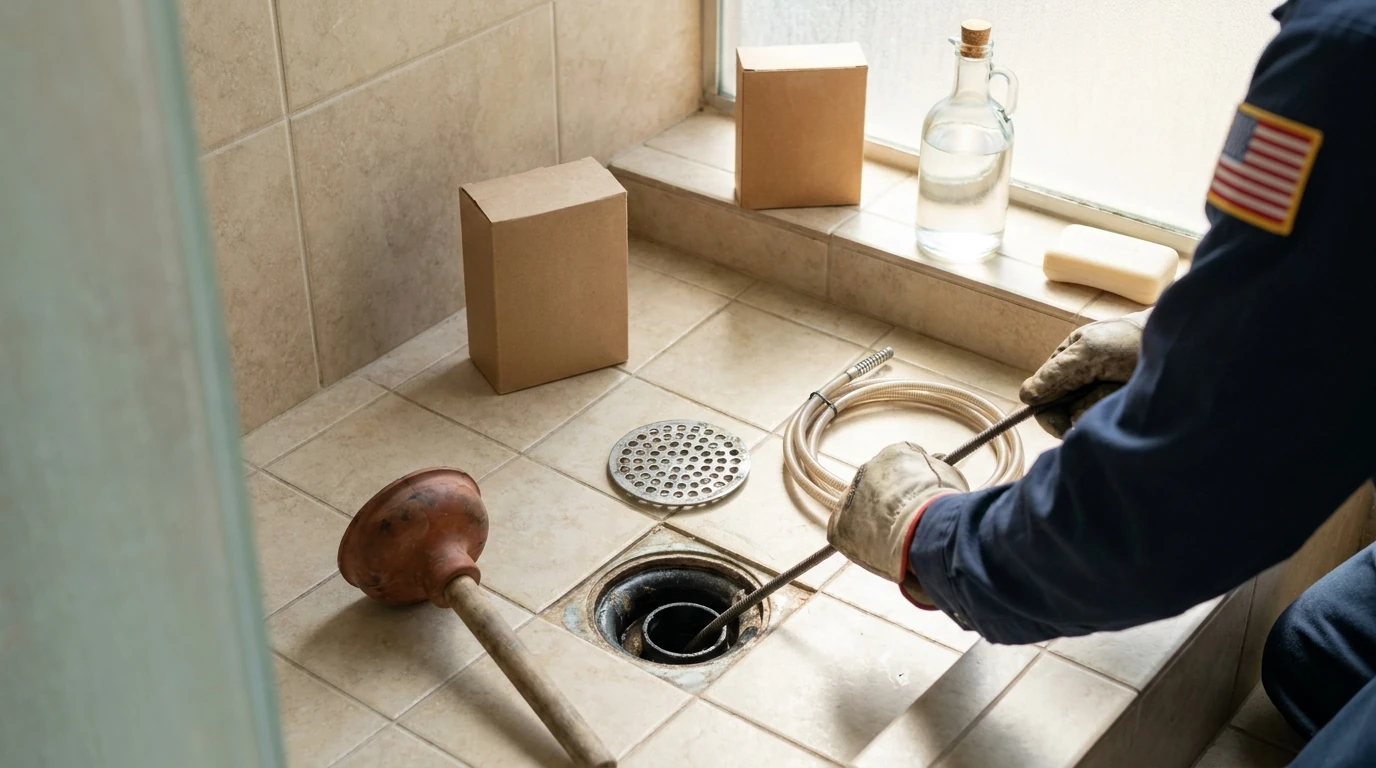
TL;DR: Clear standing water with a cup plunger, then bail out what’s left and flush with boiling water. For a hair clog with no standing water, try baking soda and vinegar or a petroleum-jelly-coated plunger and let it sit before rinsing. Skip liquid chemical drain cleaners, which eat away at pipes and are dangerous for anyone who has to work on the line later. If more than one drain backs up, or the clog comes right back after you clear it, the blockage is likely deeper than the trap and it’s time to call a licensed plumber.
If you’re standing ankle-deep in shower water right now watching it barely trickle down the drain, don’t reach for the bottle of liquid drain cleaner under the sink. Shower and tub drains clog for predictable reasons, and most of the time you can clear one yourself. Here’s the order to try things in, and how to tell when it’s past the point of a DIY fix.
Why won’t water drain from my shower?
The most common cause is a wad of hair tangled with soap scum sitting in the trap or the first few feet of drain pipe. Hair acts like a net that catches soap film, skin oils, and mineral scale, and over weeks that net tightens into a solid plug.
Hard water makes it worse, because its minerals speed up soap scum buildup inside drain lines. That scum is what turns a little bit of hair into a clog that boiling water alone won’t touch.
How do I unclog a shower drain with standing water in it?
Start with a cup plunger pressed directly over the standing water and plunge several times with firm, even strokes. The suction often pulls the clog loose enough for the water to start moving again.
If plunging doesn’t work, you need to get the standing water out before trying anything else. Bail it into a bucket and dump it down another drain or outside, since you don’t want several inches of water sitting on top of whatever is blocking the pipe.
Once the tub or shower pan is empty, pour boiling water down the drain slowly and carefully, staying clear of splashback. If your drain lines are plastic (PVC), use very hot tap water instead, since boiling water can soften plastic pipe joints. Give it a few minutes to soften whatever is stuck, then run warm water to check for improvement. If the water still sits, move on to the hair-clog methods below.
How do I clear a hair clog once the standing water is gone?
Baking soda and vinegar is the easiest household method: pour a cup of baking soda down the drain, follow it a few minutes later with a cup of white vinegar, and let the reaction sit for a couple of hours before flushing with hot water. It works best on moderate soap-scum buildup, not a dense mat of hair.
For a denser hair clog, coat the rim of a rubber plunger with a thin layer of petroleum jelly to improve the seal, then work the plunger over the drain in short, sharp strokes. The goal is suction strong enough to pull the hair mass up and out rather than just pushing it deeper.
Some people also pour a two-liter bottle of cola down the drain and let it sit for about an hour before rinsing with hot water. The phosphoric acid in cola can help break down soap film, though it’s a slower, milder approach than plunging and works best alongside one of the other methods, not instead of it.
Should I use a liquid or gel drain cleaner?
No. Liquid drain chemicals are hard on pipes and risky for anyone who later has to put a cable or camera down that same line. The chemicals can pit metal fittings, soften certain plastics, and linger in standing water, which means a technician rodding the drain afterward can get splashed with caustic residue still sitting in the pipe.
If you want a side-by-side on what actually clears a drain versus what just masks the problem, our guide to chemical drain cleaners versus calling a plumber breaks down the tradeoffs in more detail.
Is it just the one drain, or more than one?
Before you assume it’s a simple hair clog, run water in a nearby sink or flush a toilet to see if other fixtures are draining normally. A clog isolated to one shower or tub is usually local debris. A clog affecting multiple fixtures, or every drain on one side of the house, points to a blockage further down the line, possibly in the main drain or sewer lateral.
Standing water that sits for days can also start attracting small flies that breed in the organic film coating the pipe walls; if you’re seeing those around the drain, our drain fly guide covers how to clear that out alongside the clog itself.
How do I unclog a slow bathroom sink drain?
A slow bathroom sink is usually the same hair-and-scum combination, but because the P-trap sits right under the sink, you can often access it directly. You’ll need a bucket, a bent wire hanger or drain snake, a mask, and eye protection.
Unscrew the wingnut holding the stopper lever and pull the stopper out of the sink for cleaning. Feed the wire into the open drain to pull out whatever is within reach, then place the bucket under the P-trap, the U-shaped pipe that holds a small amount of water to block sewer gas from coming back up into the room.
Loosen the slip joints on both ends of the P-trap by hand, let it drain into the bucket, then remove and clean it out. Do the same for the gooseneck pipe against the wall, feeding the wire further into the wall line before reassembling everything hand-tight, not overtightened, and reseating the stopper.
When does a shower or sink clog need a plumber?
If plunging, hot water, and the hair-dissolving methods above don’t bring real improvement, the clog is probably sitting deeper in the line than you can reach by hand. That’s a sign of an obstruction further down the branch or main drain, not just hair at the surface.
RT Olson Plumbing, Heating and Air Conditioning uses sewer cameras and mechanical drain equipment to locate and clear clogs that DIY methods can’t reach. Schedule a drain cleaning visit if repeated attempts aren’t holding, or if the clog keeps returning within days.
How do I keep shower and sink drains from clogging again?
Routinely flushing drains with hot water helps dissolve soap scum and grease before it builds into a clog. It’s the same principle as the boiling-water step above, just done as routine maintenance instead of an emergency fix.
A drain cover or hair catcher, either one that sits inside the drain or one that fits over it, stops hair before it reaches the trap at all, and only takes a few seconds to wipe clean every couple of days. That one habit prevents most of the hair clogs described in this guide from forming in the first place.
A clog that keeps coming back despite regular maintenance usually means there’s a narrowing or buildup further down the line that a plunger can’t touch. At that point, a camera inspection is the fastest way to see exactly what’s going on before it turns into a bigger repair.
About RT Olson Plumbing, Heating and Air Conditioning
RT Olson Plumbing, Heating and Air Conditioning has served Corona, CA and the surrounding Inland Empire since 2014, holding California contractor license #997337 (verify any contractor’s license at cslb.ca.gov). The company offers 24/7 service and holds a 4.9-star Google rating across more than 600 reviews. This guide first ran on RT Olson’s previous website and was updated for Corona homeowners in October 2026.
Need help now? Call RT Olson Plumbing, Heating and Air Conditioning at (951) 344-5596.