
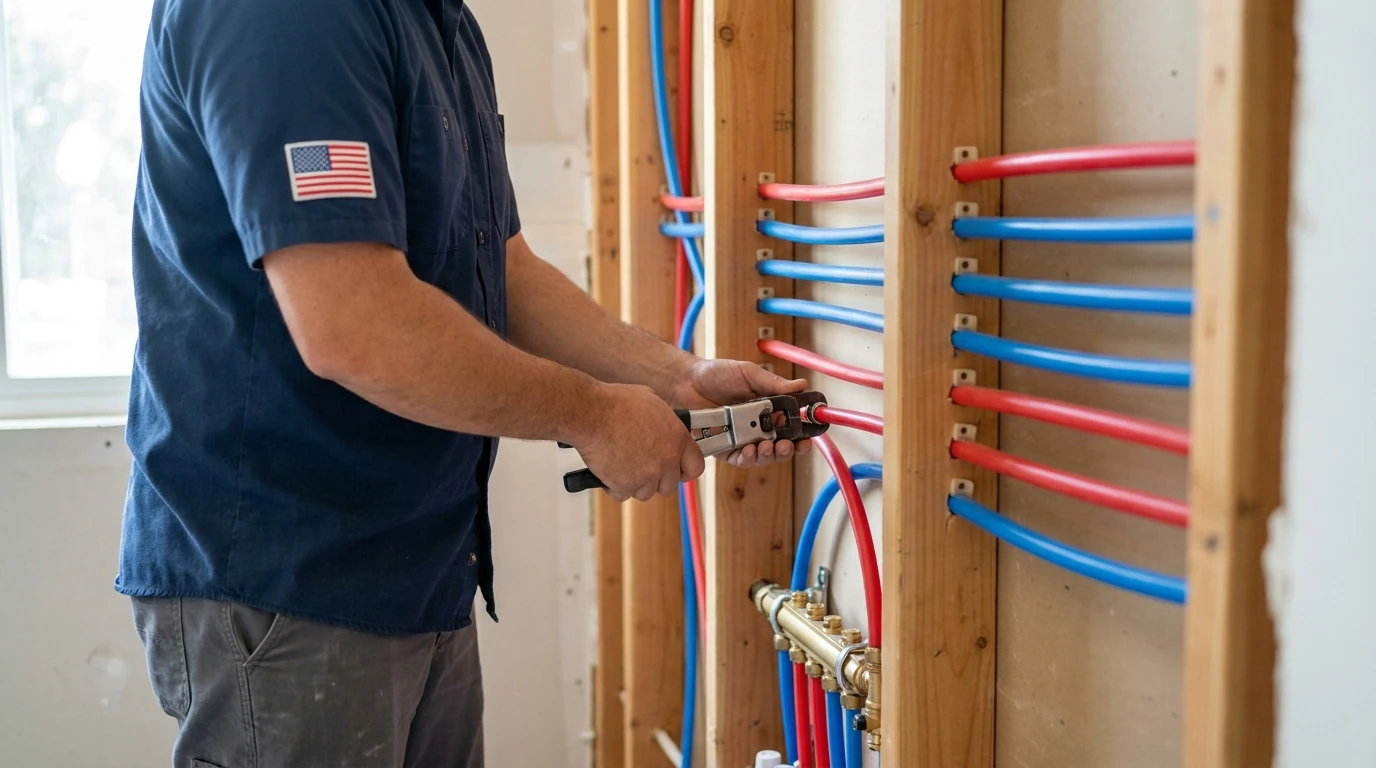
TL;DR: PEX (cross-linked polyethylene) is a flexible plastic water line that has replaced copper and galvanized steel in most new homes and whole-house repipes. It runs in long continuous lengths with fewer joints, resists scale buildup from hard water, and costs less to install than copper. It can’t be used outdoors in direct sunlight or in high-heat spots like the water heater connections, and rodents can chew it. For most homes, the choice between PEX-A, PEX-B, and PEX-C comes down to budget, water chemistry, and how the lines are routed.
If you’re considering a repipe and a plumber suggested PEX instead of copper, that is not a downgrade. PEX is a less expensive option than copper, it’s quieter, and it is now used in most new construction. Remember the rattling in the walls when you turned on a faucet in an older house? That was water rushing through rigid metal pipe, and flexible PEX largely ends it. Here is what PEX actually is, where it earns its reputation, where it falls short, and how to tell the three common types apart.
What Is PEX Piping?
PEX is cross-linked polyethylene tubing, a flexible plastic water line that runs in one continuous length through walls, attics, and crawlspaces instead of rigid, joint-heavy copper or galvanized pipe.
The tubing comes in diameters from 3/8 inch up to 1 inch and in color-coded jackets: red for hot water lines, blue for cold, and white or gray for either. The color has nothing to do with the material itself; it just makes future repairs faster because any plumber can see at a glance which line carries what.
The crosslinking process that gives PEX its name was developed in Germany by chemist Thomas Engel in the 1960s, originally for radiant floor heating. It is still used under concrete slabs for radiant floor heating, and today most new-construction homes in the U.S. use it for their water supply lines, because a single length can run from one point to another with far fewer connections that could break or burst over time.
Is PEX Piping Any Good?
Yes. In most cases, PEX is an excellent alternative to copper or galvanized steel, not a cheaper compromise.
The advantages show up in a few specific ways:
- Fewer connections. A single PEX run from the manifold to a fixture eliminates most of the couplings that eventually corrode or loosen in copper systems.
- Resistance to scale. PEX’s smooth interior does not accumulate the lime and mineral scale that builds up inside metal pipe over years of hard water.
- Quieter lines. The flexibility that lets PEX snake through a wall cavity also damps out the water-hammer rattle you get from rigid copper or galvanized pipe.
- Lower installed cost. Material and labor both run less than copper, mostly because of the reduced fitting count and faster run times.
- Less chance of freeze damage. Its flexibility means PEX is less likely to freeze and break than rigid pipe.
For simple repairs, like replacing a single damaged supply line, a moderately skilled homeowner with the right crimp or expansion tool can handle it. A whole-house repipe is a different scope of work, covered below.
What Are the Disadvantages and Restrictions of PEX?
PEX’s main limitations are UV sensitivity, rodent vulnerability, and a handful of code-specific restrictions that a licensed plumber needs to account for before pulling a permit.
Direct sunlight breaks PEX down over time, so it can’t be used for exposed exterior plumbing, where UV damage can lead to leaks. It also doesn’t belong in high-heat spots, such as the water heater connecting lines or near recessed lighting; a different connector material is used there.
The tubing’s flexibility is also its weak point in attics and crawlspaces: rodents can chew through an exposed run, which can create leaks inside walls. PEX is also not recyclable the way copper is, and manufacturers generally recommend sticking with one brand’s fittings and tubing system rather than mixing parts, since crimp rings and expansion fittings are sized to a specific tubing diameter and wall thickness.
Water chemistry matters too. Heavily chlorinated water and other chemical additives can make some PEX wear out faster, which is one reason the type you choose (below) matters. PEX also needs specific connectors and tools, and the fittings must match the tubing diameter exactly. For drinking water lines, use tubing certified for potable water from a reputable manufacturer.
What Is PEX-A vs PEX-B vs PEX-C?
The letter after PEX tells you how the tubing was manufactured, which affects its flexibility, cost, and how it holds up to your local water chemistry.
- PEX-A is made using the original peroxide (Engel) method. It is the most flexible of the three, recovers best from kinks, and tolerates cold snaps with the least cracking risk. It is also the most expensive.
- PEX-B is made with a moisture-cure (silane) process, which leaves it slightly more rigid than PEX-A but it holds up better in areas with slightly chlorinated water. It sits in the middle of the price range.
- PEX-C is made through an electron-beam irradiation process. It is the stiffest of the three and the least expensive, and it works best for short, mostly straight runs rather than tight bends.
Colder climates often fare better with PEX-A, while warmer areas may not need as much flexibility. Ask whoever is quoting your repipe about your water’s chemistry: chlorine levels can tip the decision toward PEX-B, while tight bends through stud bays favor PEX-A. If you want more background on how your home’s water quality interacts with your plumbing, our post on how a water softener works covers the hard-water side of that equation.
When Is PEX Repiping a Job for a Licensed Plumber?
Replacing a single cracked supply line is a reasonable DIY repair; repiping an entire house is not, because the work happens inside walls, attics, and slab penetrations where a missed crimp or a wrong-size fitting means water damage you will not see until it has already spread.
A whole-house repipe also means designing a manifold layout, matching new shutoffs to existing fixtures, pulling a permit, and passing inspection, on top of owning or renting crimp and expansion tools that cost real money for a one-time job. If your home is still running on original galvanized steel or you have had signs of a slab leak more than once, a full PEX repipe is usually the more cost-effective long-term fix compared to chasing individual leaks pipe section by pipe section. RT Olson Plumbing, Heating and Air Conditioning handles repiping across Corona and the surrounding Inland Empire, and our repiping service page walks through what a whole-house job involves.
If you are weighing a repipe against repair after a recurring leak, our guide on how to find a water leak is a useful first step before you call anyone out.
PEX has earned its place as the default repiping material for a reason: fewer joints, lower installed cost, and real resistance to the scale buildup that hard water causes in older copper systems. It is not the right material for every application, which is exactly why a licensed plumber walks the home before recommending it. Request a repiping quote from RT Olson Plumbing, Heating and Air Conditioning at (951) 344-5596 if you want a straight answer on whether PEX makes sense for your house.
About RT Olson Plumbing, Heating and Air Conditioning
RT Olson Plumbing, Heating and Air Conditioning has served Corona, CA and the surrounding Inland Empire since 2014, holding California contractor license #997337 (verify any contractor’s license at cslb.ca.gov). The company offers 24/7 service and holds a 4.9-star Google rating across more than 600 reviews. This guide first ran on RT Olson’s previous website and was updated for Corona homeowners in October 2026.