HVAC Installation and Replacement in Corona
HVAC installation and replacement in Corona and surrounding areas. Licensed and insured plumbing and HVAC pros, upfront pricing, free estimates. Call (951) 344-5596.
Your air conditioner or furnace has reached the point where the repair bills are stacking up, the system struggles to keep the house comfortable, or a technician has told you the equipment is at the end of its serviceable life. Replacing an HVAC system is one of the larger investments a homeowner makes, and unlike a repair, the decisions made on install day — sizing, efficiency, ductwork, and permitting — lock in your comfort and energy costs for the next fifteen years. Done right, a new system is quieter, more efficient, and better matched to your home than the one it replaced. Done carelessly, it repeats every mistake of the old install with newer parts.
What HVAC installation and replacement actually involves
A proper HVAC replacement is a design job before it is an installation job. The single most important step happens before any equipment is ordered: a load calculation. Sizing a new system by simply matching the tonnage of the old unit repeats whatever sizing error was made the first time, and oversized equipment is one of the most common problems in residential HVAC. An oversized air conditioner cools the air quickly but shuts off before it removes humidity, leaving the house cool and clammy and short-cycling the compressor toward an early failure. An undersized system runs nonstop and never catches up on the hottest afternoons.
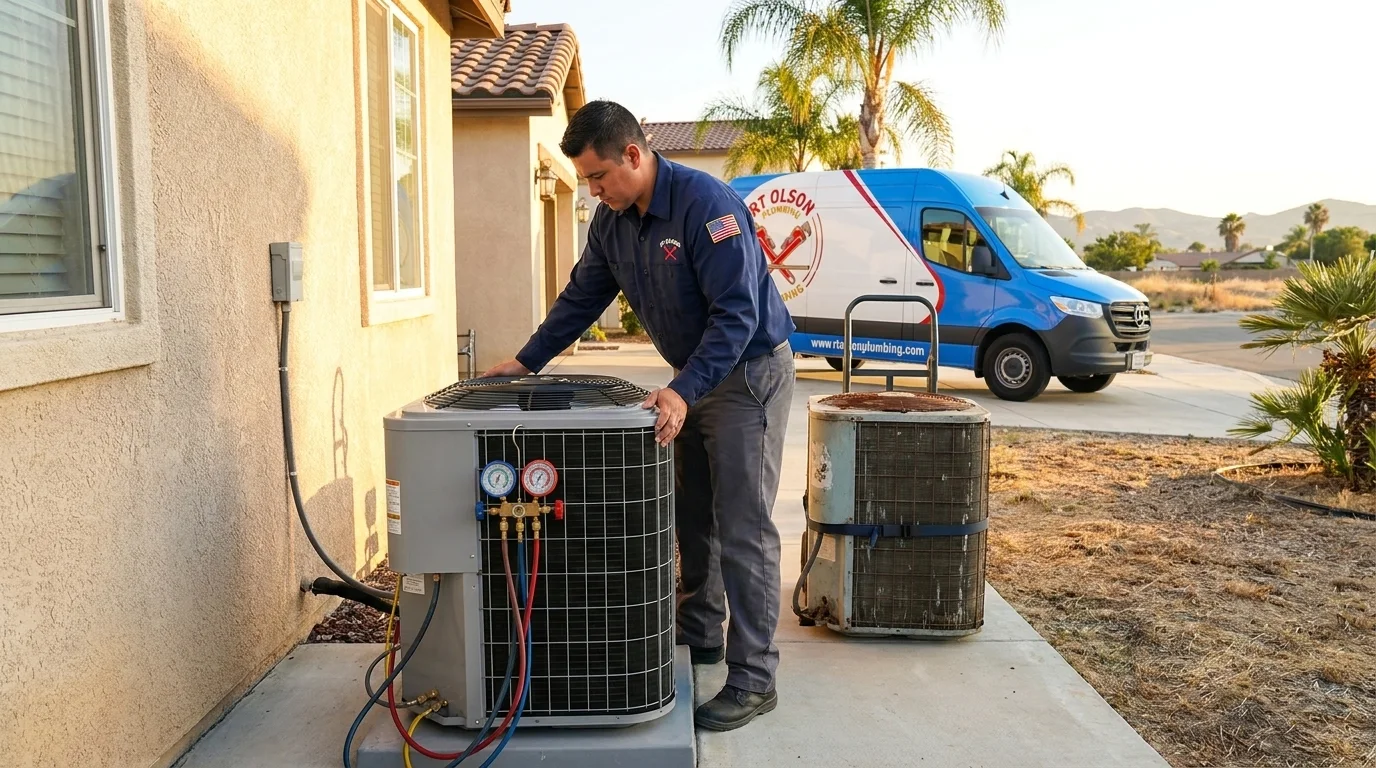
Beyond sizing, a full HVAC installation covers matching the indoor and outdoor equipment as an engineered set, evaluating whether the existing ductwork can deliver the airflow the new system needs, handling refrigerant line set replacement or flushing, setting the condensate drainage correctly, making the electrical and gas connections to code, and pulling the mechanical permit for inspection. A system swap where the installer bolts new equipment to old, leaky, undersized ducts will never perform to its rating no matter how efficient the box on the pad claims to be.
Whether you are replacing just the air conditioner, just the furnace, or the full system, the goal is the same: a matched, correctly sized, properly installed system that runs efficiently and lasts. When only one component has failed, replacing the whole matched set is not always necessary, but compatibility between old and new components has to be verified, not assumed.
Our process
-
In-home assessment and load calculation. We measure the home, not just the old equipment — square footage, insulation levels, window area and orientation, ceiling height, and duct configuration all feed a Manual J load calculation. This tells us the actual heating and cooling capacity your home needs rather than inheriting the old unit’s sizing.
-
Ductwork and airflow evaluation. Before specifying equipment, we assess the existing ducts for leakage, undersizing, and poor design. High-efficiency and variable-speed systems in particular need adequate airflow to hit their rated performance, and a new condenser strapped to restrictive ductwork underperforms from day one.
-
Equipment selection and honest efficiency guidance. We match indoor and outdoor components as an engineered set and walk you through the SEER2 efficiency options against your utility rates and how long you plan to stay in the home. Higher efficiency is not automatically better value if the ductwork cannot support it, and we say so.
-
Permitted installation to code. We pull the required mechanical permit, remove the old equipment, set and connect the new system — refrigerant lines, electrical, gas, and condensate — to manufacturer specification and current code, and coordinate the inspection. Permitting protects your warranty and your position at resale.
-
Startup, commissioning, and documentation. After installation we verify refrigerant charge, measure airflow and static pressure, confirm the system is operating within manufacturer spec, and document model and serial numbers, efficiency ratings, and warranty registration. A system that is installed but never commissioned to spec often runs years below its rating without anyone noticing.
What separates a good HVAC installation from a bad one
The most common failure in residential HVAC replacement is skipping the load calculation and sizing off the old unit. It is faster and it is what a rushed installer does, but it perpetuates oversizing that costs comfort, humidity control, and equipment life. A correctly sized system that runs longer, gentler cycles beats an oversized one that blasts and shuts off every time.
The second is ignoring the ductwork. Duct leakage of 20 to 30 percent is common in older homes, and every bit of that is conditioned air you paid for leaking into the attic. Installing a high-efficiency system onto leaky, undersized ducts is spending premium-equipment money and getting builder-grade performance. A good installer measures static pressure and addresses the duct side, not just the equipment.
Third is commissioning. Refrigerant charge that is off by even a modest amount drops capacity and efficiency measurably, yet a system that is charged by feel rather than measured to manufacturer specification is a persistent shortcut. Proper startup — verifying charge, airflow, and static pressure and documenting the numbers — is what turns correctly selected equipment into a correctly performing system.
What does HVAC installation and replacement cost?
Cost varies with system size, efficiency level, whether you are replacing one component or the full system, and how much ductwork or electrical work the job requires. Most homeowners fall somewhere in the ranges below for industry-standard equipment; these are typical market figures, not RT Olson Plumbing, Heating and Air Conditioning quotes.
| Scenario | Typical range |
|---|---|
| Central AC condenser and coil replacement (matched) | $5,500 - $10,500 |
| Gas furnace replacement | $4,000 - $8,000 |
| Full HVAC system (AC + furnace/air handler) | $9,000 - $18,000 |
| High-efficiency / variable-speed system upgrade | Add 15% - 40% to base system cost |
| Ductwork repair or partial replacement | $1,500 - $6,000 |
| Permit and inspection | $150 - $500 |
Every home is different, and the load calculation and duct evaluation are what turn these ranges into an accurate scope. A written estimate before any work begins is what tells you exactly what your project includes.
Seasonal and regional considerations
Corona and the Inland Empire put a heavy annual load on cooling equipment — air conditioners run hard from May through October, and the region’s dry, dusty Santa Ana conditions clog condenser coils faster than in coastal climates. That sustained demand is exactly why sizing and efficiency matter more here than in milder markets: an oversized or under-commissioned system that would limp along on the coast reveals its weaknesses fast on a string of 105°F afternoons.
The practical timing advice is to plan a replacement in the shoulder seasons — spring before the first heat wave, or fall after cooling season winds down — rather than in the middle of a July emergency when a failed system leaves you choosing under pressure. A planned replacement gives you time for a proper load calculation, honest efficiency comparison, and permitting rather than a rushed like-for-like swap.
Service area
RT Olson Plumbing, Heating and Air Conditioning is based in Corona and serves homeowners and property managers throughout the Inland Empire and western Riverside County, including Riverside, Norco, Eastvale, Chino, Jurupa Valley, and Yorba Linda. We handle HVAC installation and replacement as a planned upgrade and as the next step when a repair no longer makes financial sense.
If your system is aging, failing, or fighting to keep up with Corona summers, the right first step is an in-home assessment and load calculation before any equipment is ordered. Call RT Olson Plumbing, Heating and Air Conditioning at (951) 344-5596 to schedule your assessment and receive a written estimate. Licensed and insured, license #997337.
Services We Handle
- Ductless Heating and AC
- HVAC Maintenance
- Install AC
- Install Ducts Vents
- Install Heating System
- Install Thermostat
- Thermostat Installation
Frequently Asked Questions
How do I know whether to repair my HVAC system or replace it?
What is a Manual J load calculation and why does it matter for a new system?
What does SEER2 mean and how efficient a system should I buy?
Do I need a permit to replace my HVAC system in Corona?
Should I replace the furnace and air conditioner at the same time?
Looking for the best hvac installation and replacement company in Corona?
RT Olson Plumbing, Heating and Air Conditioning provides licensed and insured hvac installation and replacement in Corona, CA and the surrounding area, and has served local property owners since 2014. Customers rate us 4.9 out of 5 stars across 619 Google reviews. We answer calls 24/7 — call (951) 344-5596 for immediate help.
Need HVAC Installation and Replacement now?
We respond 24/7 across Corona and surrounding CA cities.