TL;DR: Most high water bills come down to a handful of fixable habits, old fixtures, or a leak you can’t see. Fix dripping faucets and running toilets first (a single drip can waste over 2,000 gallons a year), switch to WaterSense-labeled fixtures, run full loads only, water the lawn at the right time of day, and check your water meter with everything off to rule out a hidden leak. Small changes stack up to a noticeably lower bill within a month or two.
If your last water bill made you do a double take, you’re not imagining it. A sudden jump usually means one of three things: you added a new water use (a pool fill, more houseguests, a new sprinkler zone), your habits drifted without you noticing, or water is escaping somewhere you can’t see, like a slab leak under the house. Here’s how to lower the bill on purpose, plus how to tell which category you’re in.
How Can I Lower My Water Bill?
You lower a water bill by closing small leaks, swapping inefficient fixtures, and shifting outdoor watering to times when less water evaporates. No single change fixes a bill overnight. It’s a stack of small habits and a few one-time upgrades that, together, show up clearly on next month’s statement.
The tips below are organized from fastest payoff (fix what’s leaking) to longer-term upgrades (fixtures and landscaping). Not every tip applies to every household. Pick the five or six that fit your home and give them a billing cycle or two before judging the results.
How Much Is the Average Water Bill?
One widely cited estimate (from Moving.com) put the average family of four at about $73 a month. Your actual number depends on your water district’s rates, the age of your home, whether you have a pool, and even whether people shower morning and night. Many water districts also charge more per unit as usage climbs, which is part of why a leak or an extra sprinkler cycle can swing a bill more than you’d expect.
What Causes a High Water Bill?
A high water bill is almost always caused by more water use than normal, whether that’s intentional (a new hot tub, more laundry) or not (a leak). If your bill has been steady for months and then spikes without an obvious reason, a hidden leak is the most likely explanation. Toilets, irrigation lines, and slab plumbing are the usual suspects, since none of those leaks show up as a puddle on the kitchen floor.
If you’ve ruled out new water use and the bill is still climbing, read how to find a water leak in your home’s plumbing before assuming it’s just habits.
20 Ways to Save Money on Your Water Bill
Fix what’s already leaking
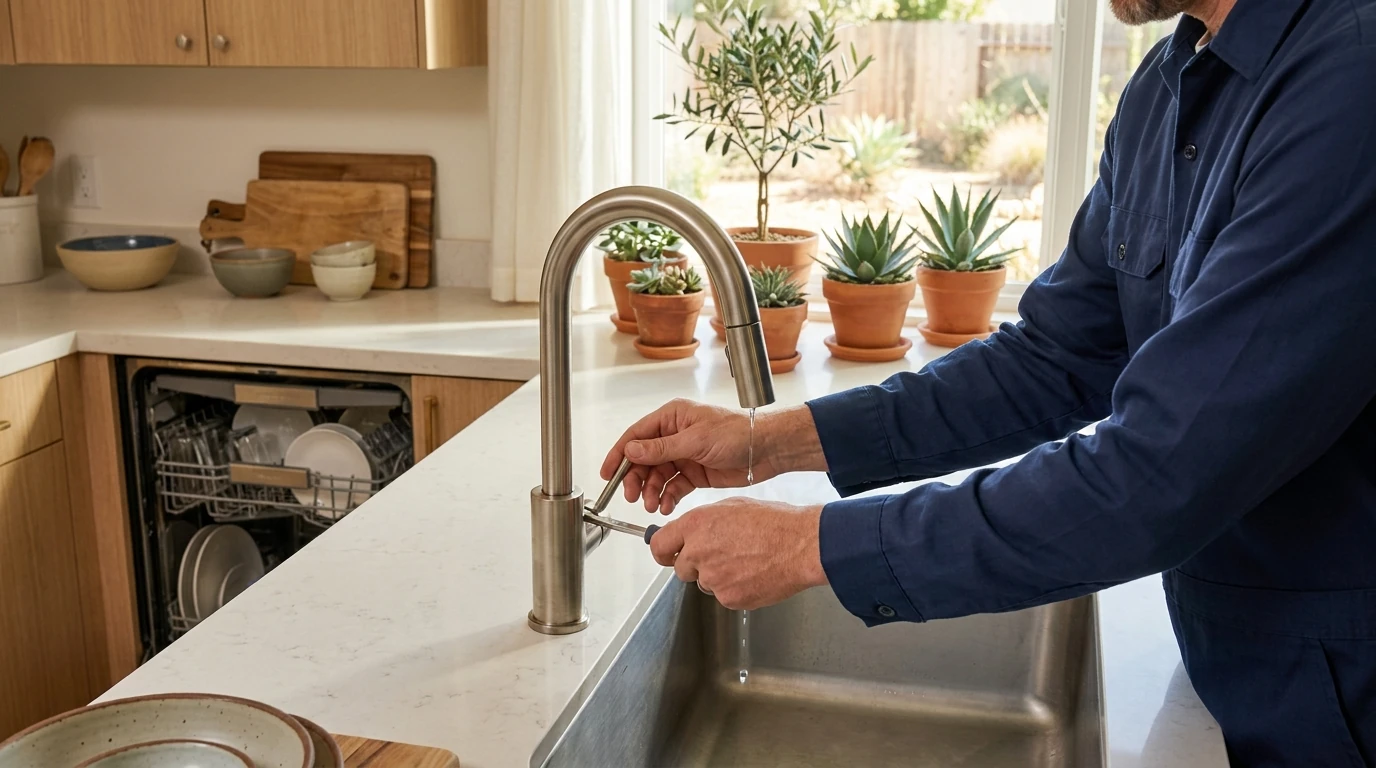
- Fix leaks and slow drips. According to the U.S. Geological Survey, a faucet leaking at one drop per second wastes about 2,082 gallons a year, water you’re paying for and never using. Walk through every bathroom, kitchen, and outdoor spigot and tighten or replace worn washers and cartridges.
- Dye test your toilets. Add a few drops of food coloring to the tank. If color seeps into the bowl after a few hours without a flush, there’s a good chance the toilet is leaking. It isn’t foolproof, but it’s a good sign something needs a closer look.
- Turn off the shower while you lather up. Shutting the water off while shampooing and conditioning, especially with long hair, keeps hot water in the tank instead of down the drain.
Use appliances the efficient way
- Run the dishwasher instead of hand-washing. A modern ENERGY STAR dishwasher uses less water per load than hand-washing the same dishes under a running tap.
- Only run full loads in the dishwasher and washing machine. A half-full load uses nearly the same water as a full one, so batching laundry and dishes cuts total cycles.
- Skip the garbage disposal when you can. Rinsing food scraps down a disposal uses water every time. An outdoor compost bin handles most kitchen scraps without the tap running.
Upgrade fixtures
- Install WaterSense certified faucets and showerheads. WaterSense-labeled faucets reduce water flow by 30 percent or more without sacrificing performance, and they come in styles that fit most bathroom and kitchen remodels.
- Choose an efficient water heater. A tankless unit heats water on demand instead of keeping a 40 or 50-gallon tank hot around the clock, and it only delivers the volume you actually use.
- Add a hot water recirculating system if you’re used to running the tap while waiting for hot water to arrive. A sensor-driven pump returns cooled water to the tank instead of sending it down the drain.
- Put a water-filled bottle in an older toilet tank. A sealed plastic bottle filled with water displaces some of the tank’s volume, so less water goes to the bowl on each flush. People are divided on this one: make sure the bottle doesn’t interfere with the flapper or fill valve, and treat it as a stopgap until you can upgrade.
- Upgrade old fixtures outright. In an older home, replacing as many fixtures as you can, especially toilets and showerheads, with modern low-flow models is a cost-effective way to cut the bill every month.
Rethink outdoor and landscaping water use
- Cover the pool. A pool cover cuts evaporation significantly, which means fewer refills and a lower water bill. It also helps keep wildlife out and the water temperature steadier.
- Water the lawn early morning or after sunset. Watering in the heat of the day loses more to evaporation before it reaches the roots.
- Install a weather-based irrigation controller. These systems skip scheduled cycles automatically when it has rained or is about to, and most offer a smartphone app for manual overrides.
- Raise your mower deck an inch or more. Taller grass holds moisture in the soil longer, which means fewer irrigation cycles to keep a lawn green.
- Consider low-water landscaping. Drought-tolerant plants and, in some yards, artificial turf hold up well in Southern California’s dry season and need little to no irrigation once established.
Habits that cost nothing
- Use the car wash instead of the driveway. Most commercial car washes recycle their water; a garden hose at home does not.
- Check your water meter with every fixture in the house off. If the small leak-indicator dial is still spinning, water is moving somewhere you can’t see.
- Teach kids to shut off the tap while brushing teeth or washing hands. It’s a small habit that adds up over a household’s lifetime.
- Reuse incidental water. A glass of water that didn’t get finished, or the bowl you rinsed vegetables in, can water a houseplant instead of going down the drain.
When Is It a Leak Instead of Just Usage?
It’s worth a professional leak inspection when your bill keeps climbing after you’ve tried the habit changes above, or when the meter’s leak indicator spins with everything off. Those two signs point to water loss inside the walls, under the slab, or in the irrigation line, not a habit problem you can fix with a shorter shower.
For a possible slab leak, watch for warm spots on the floor, the sound of running water with everything off, or a water bill that’s crept up over several months with no clear cause; signs of a slab leak covers the specific warning signs in more depth. Professional leak detection equipment can pinpoint the source without tearing out flooring to go looking for it. RT Olson Plumbing, Heating and Air Conditioning provides leak detection across Corona and the surrounding Inland Empire, 24/7.
If you’ve worked through the list above and your bill still doesn’t make sense, that’s the point to stop guessing and get a reading from a meter and a trained technician, not another month of trial and error.
Most of these twenty tips cost nothing but a habit change; a few, like a tankless water heater or a full fixture upgrade, are worth budgeting for over time. Start with the free fixes, especially the meter check and the dye test, before spending money anywhere else.
About RT Olson Plumbing, Heating and Air Conditioning
RT Olson Plumbing, Heating and Air Conditioning has served Corona, CA and the surrounding Inland Empire since 2014, holding California contractor license #997337 (verify any contractor’s license at cslb.ca.gov). The company offers 24/7 service and holds a 4.9-star Google rating across more than 600 reviews. This guide first ran on RT Olson’s previous website and was updated for Corona homeowners in October 2026.
Need help now? Call RT Olson Plumbing, Heating and Air Conditioning at (951) 344-5596.