
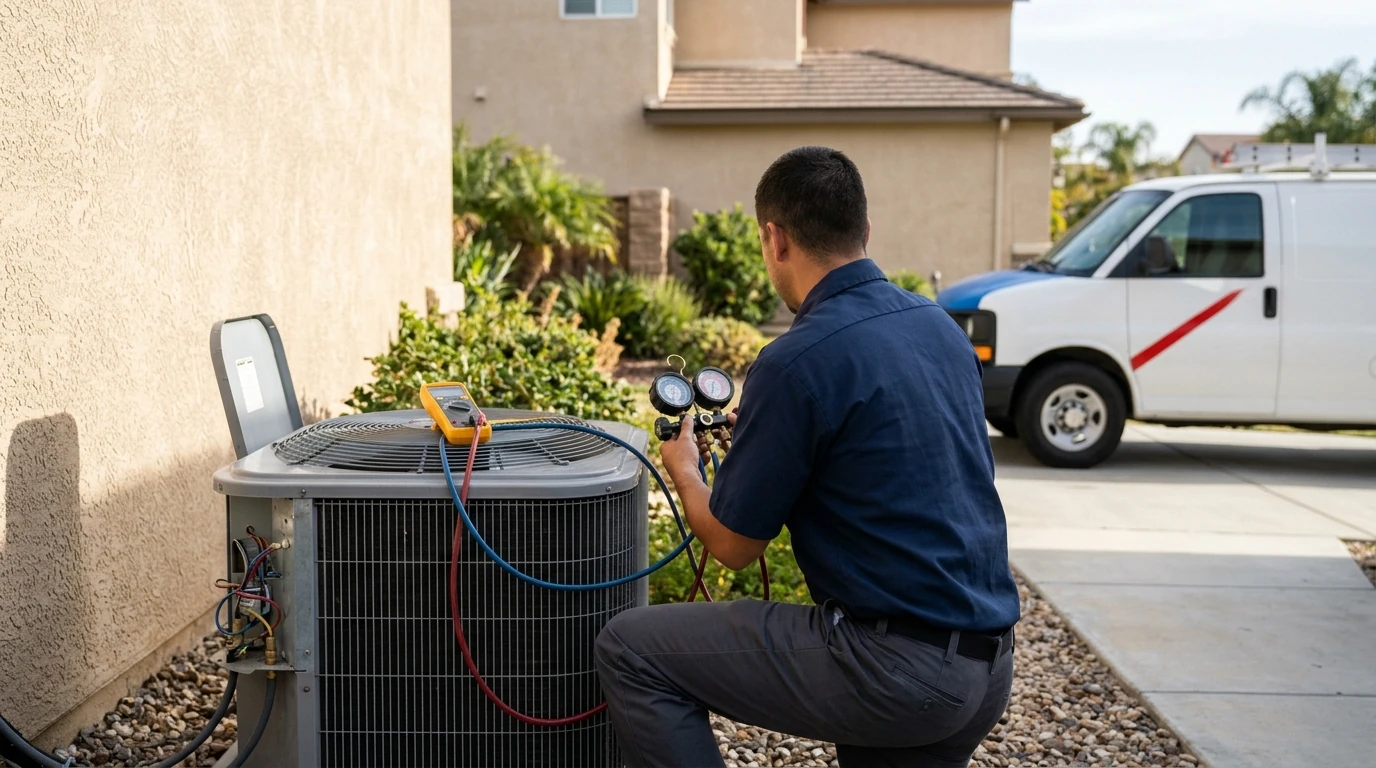
TL;DR: A typical AC repair in Corona, CA runs $150 to $650 for common fixes like a capacitor, a contactor, or a refrigerant top-off. Major repairs, such as a failed compressor or a leaking evaporator coil, typically run $900 to $2,500 or more. The part itself is rarely the biggest cost driver: access, refrigerant type, and timing matter more. If a repair quote approaches half the cost of a new system and the unit is past 12 years old, replacement usually makes more sense.
If your air conditioner in Corona is blowing warm air during an October Santa Ana heat spike, or it’s short-cycling every few minutes, you want a number before a technician even steps out of the van. AC repair bills across the Inland Empire land in a wide range, from under $200 for a blown capacitor to well over a thousand dollars for a failed compressor. The gap comes down to a handful of specific factors: which part failed, how hard it is to reach, what refrigerant the system runs on, and whether the call falls during business hours. Here’s what actually drives each number, and when a repair quote should make you start asking about replacement instead.
How much does AC repair cost in Corona, CA?
Most AC repairs in Corona cost between $150 and $650, covering the diagnostic visit, troubleshooting, and replacing a single failed part such as a capacitor, contactor, thermostat, or condenser fan motor. Larger repairs, a failed compressor, a cracked evaporator coil, or a refrigerant leak that needs sealing and recharging, typically run $900 to $2,500 depending on the part and how much refrigerant the system needs.
A diagnostic or service call fee usually applies first, commonly $75 to $200 nationally, and it’s separate from the repair itself unless the technician rolls it in. In Corona’s inland climate, where outdoor units regularly work against triple-digit summer loads and still run into the 90s in early fall, components like capacitors and contactors wear out faster than they would in a milder coastal climate. A lot of Corona’s housing stock dates to the 1980s through early 2000s building boom, which means plenty of AC systems are now 10 to 20 years old, right in the window where repair costs start competing with replacement costs.
What does it cost to replace a capacitor or contactor?
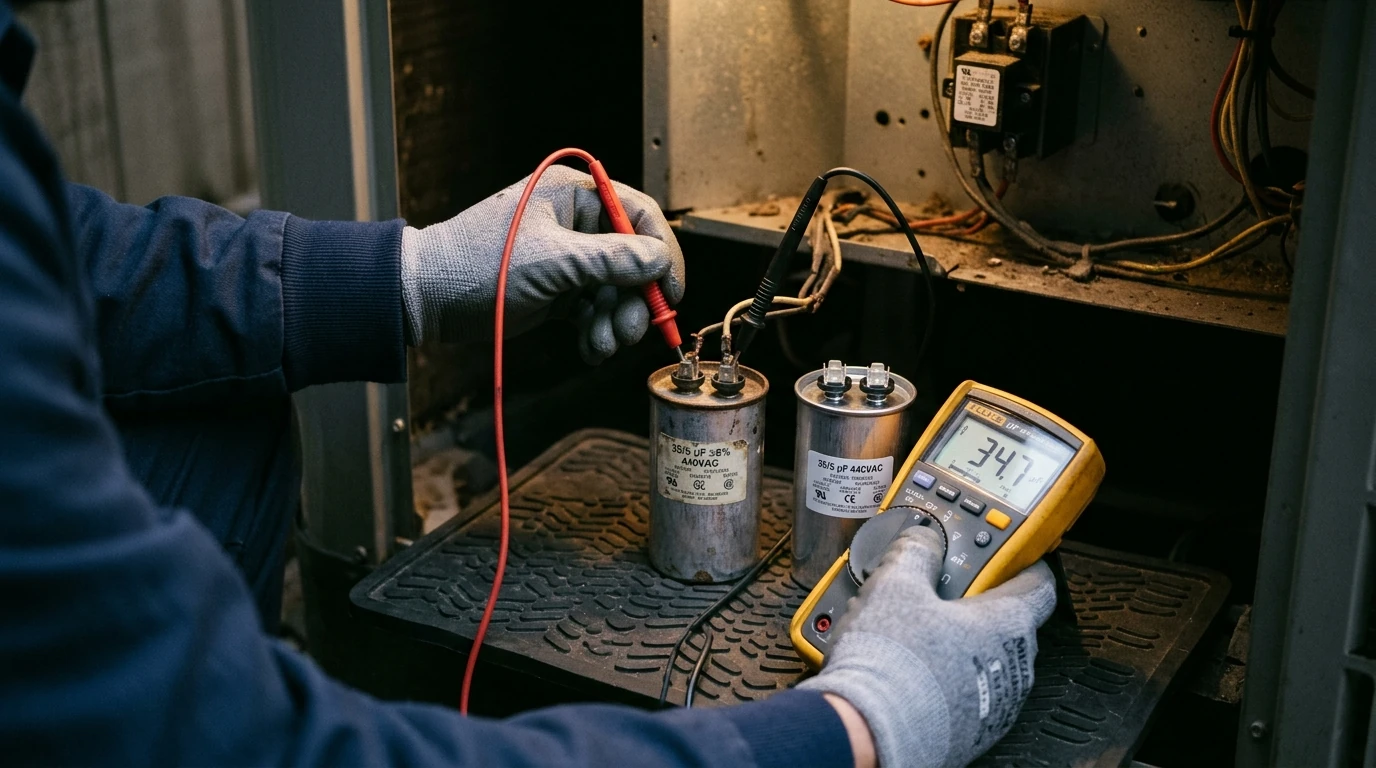
A capacitor replacement typically costs $150 to $400, and a contactor swap runs about $150 to $350, including the service call. The part itself is inexpensive, often under $30, but the rest of the bill covers diagnosis time, safely discharging a component that holds a live electrical charge, and labor to access the condenser’s electrical compartment.
These two parts are some of the most common AC failures in the Inland Empire because they take the brunt of heat cycling. A capacitor stores the jolt of energy needed to start the compressor and fan motor, and repeated heat stress shortens its lifespan. A contactor is the switch that energizes the whole outdoor unit, and constant on-off cycling through a long Corona cooling season pits the contact points until they stop closing reliably. Both are usually same-visit fixes when the part is in stock on the truck.
How much does a refrigerant recharge cost?
A refrigerant recharge usually costs $200 to $600 for a system that runs on R-410A, and it can run higher for older systems still using the phased-out R-22 refrigerant, assuming the refrigerant is even available. The total depends on how many pounds the system needs and the per-pound cost of the refrigerant itself, which has climbed as the EPA phases down high-global-warming-potential refrigerants under its Section 608 program.
Here’s the part a lot of homeowners miss: a recharge treats a symptom, not the problem. Air conditioners don’t consume refrigerant during normal operation. A system that’s low on charge has a leak somewhere, in a coil, a line set joint, or a schrader valve, and recharging it without finding and sealing that leak means paying for the same gas again in a year or two. Federal EPA Section 608 rules limit who can legally purchase, handle, and recover refrigerant, which is one reason refrigerant work costs more than a straightforward electrical part swap.
When does AC repair cost more sense than replacement?
Repair usually makes more sense when the unit is under 10 years old and the quote comes in under roughly $1,000. Replacement starts to pencil out better once a single repair quote tops $1,500, the system is 12 to 15 years old, or it’s the second major repair in two cooling seasons.
A commonly used rule of thumb multiplies the unit’s age by the repair cost: if that number clears somewhere around $5,000, replacement is usually the better financial call. It’s a heuristic, not a hard line, but it captures the real tradeoff. A new system also isn’t a like-for-like swap: a properly sized replacement follows an ACCA Manual J load calculation rather than just matching the old unit’s tonnage, which matters a lot in homes with newer insulation, added rooms, or different window exposure than when the original system went in. ENERGY STAR-certified equipment can also meaningfully cut the summer utility bill compared to a 15-year-old unit, which is worth weighing against the repair-only number. Our cooling repair guide for Chino covers what goes wrong inside the system itself if you want the mechanical side of the picture.
What else moves an AC repair quote up or down?
Beyond the part itself, a handful of factors shift the final number more than people expect:
- Access: a condenser tucked behind a block wall or a side-yard unit buried in landscaping takes longer to reach than one on an open pad.
- Parts availability: legacy R-22 systems and older proprietary parts cost more, or take longer to source, than current-production equipment.
- Timing: after-hours, weekend, and holiday dispatches typically carry a different rate than a weekday appointment.
- Warranty status: a unit still under manufacturer parts warranty may only owe labor, while an expired warranty means the full part cost lands on the invoice.
Asking for these specifics up front, not just a single dollar figure, is the difference between a quote you can trust and one that surprises you at the end.
A written quote before the work starts should spell out the diagnostic fee, the part, the labor, and whether that fee applies toward the repair if you move forward. If your system is already past the decade mark or this is a repeat repair, it’s worth requesting a replacement estimate alongside the repair quote so you’re comparing real numbers, not guessing. Schedule an AC repair diagnostic or ask about replacement options through our AC and furnace installation page and get both figures in writing before deciding.
Call RT Olson Plumbing, Heating and Air Conditioning at (951) 344-5596 to get a written diagnostic quote for your system.
About RT Olson Plumbing, Heating and Air Conditioning
RT Olson Plumbing, Heating and Air Conditioning is a licensed plumbing, heating, and air conditioning contractor serving Corona, CA and the surrounding Inland Empire since 2014, holding California contractor license #997337 (verify any license at the CSLB lookup tool). The company operates from offices in Corona and Anaheim, CA, covering cities including Riverside, Ontario, Santa Ana, and Fullerton, holds a 4.9-star Google rating across more than 600 reviews, and answers calls 24/7. This guide was prepared with input from the RT Olson team, led by Bob Olson.
Video Transcript
Is your Corona air conditioner blowing warm air during an October Santa Ana heat spike? Here’s what repairs actually cost and why. Most AC repairs in Corona run between $150 and $650, covering diagnostics and replacing one failed part. Bigger problems, like a failed compressor or a cracked evaporator coil, can run $900 to $2,500 or more depending on parts needed. A capacitor replacement typically costs $150 to $400, and a contactor swap runs about $150 to $350 total. Corona’s triple-digit summer loads push these parts hard, so capacitors and contactors fail more often here than in milder coastal climates. A refrigerant recharge usually costs $200 to $600, but low refrigerant almost always means a hidden leak somewhere. Recharging without finding that leak just means paying for the same refrigerant again next cooling season. When a repair quote nears half the cost of a new system, and your unit is past twelve years old, replacement usually makes more sense. Access, refrigerant type, and the timing of your call all shift the final bill more than the part itself ever does. Want a clear number before work starts? Call RT Olson Plumbing, Heating and Air Conditioning at (951) 344-5596 to schedule an assessment.