
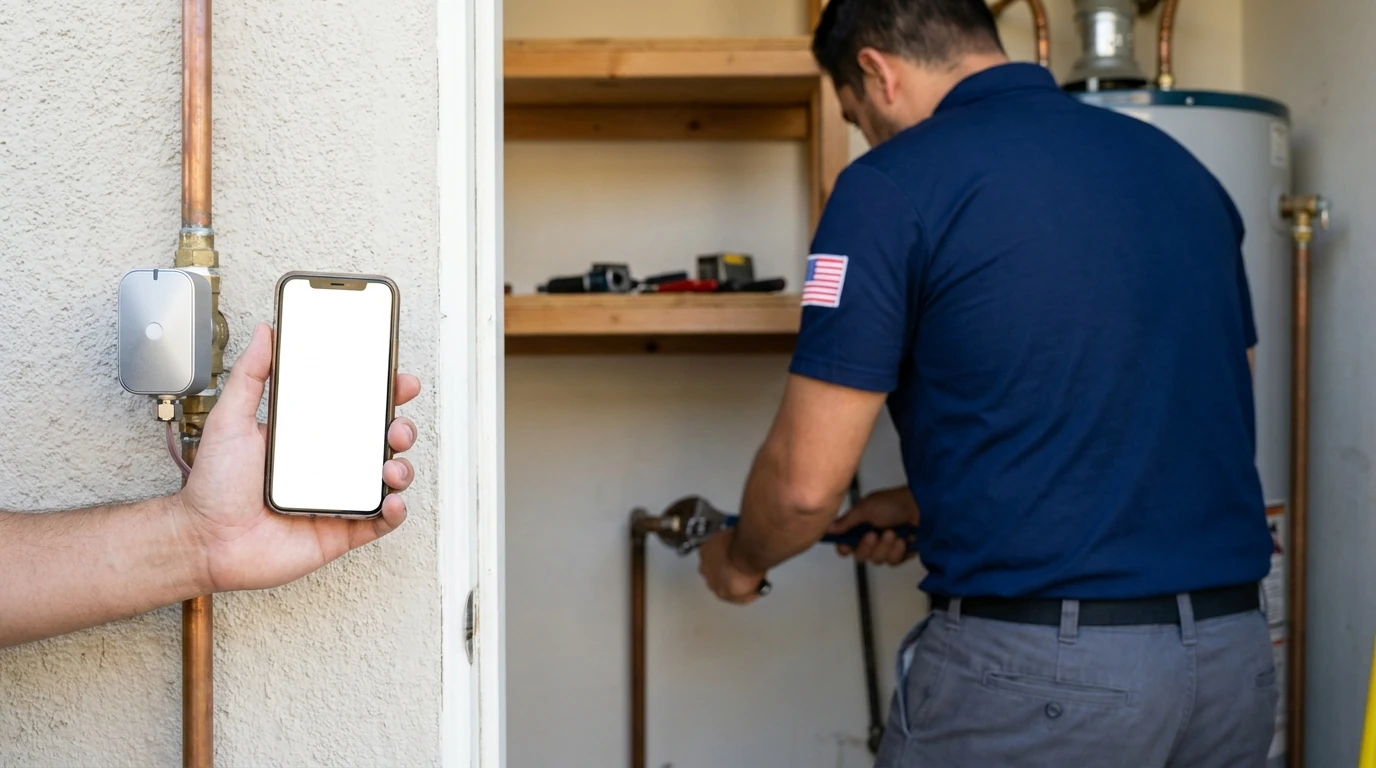
TL;DR: A smart leak detector and automatic shut-off valve mounts on the main water line entering a home and tracks flow down to about one drop per minute. When it senses a leak pattern, a slab leak, a cracked supply line, or a fixture left running, it can shut off the water automatically or send a phone alert first. The protection matters most for leaks you can’t see, like a slab leak, which can run for a long time before anyone notices, and for homes that sit empty while you’re away.
If you’ve ever come home from a weekend away to a water bill that doubled, or found a warm, soft spot on the carpet with no obvious source, you already know the risk a hidden leak poses. Plumbing leaks in slab foundations, walls, ceilings, and attics can do serious water damage, especially when no one is home, and families can end up out of the house while the plumbing is fixed and wet walls, ceilings, and floors are removed or dried. An automatic leak detector and shut-off valve, installed at the main line coming into the house, is built to catch that kind of leak within minutes instead of weeks, whether anyone is home or not.
How does an automatic leak detector and shut-off valve work?
A device like this mounts directly on the home’s main water line, right after the meter or the existing main shutoff, and measures flow continuously, down to about one drop per minute. It provides 24/7 monitoring, and the companion app shows daily water usage, pressure, and temperature.
When it detects a leak, depending on your settings, it either alerts you on your phone and waits for instructions or shuts off the water to the house automatically. You can also turn the water on and off from the app wherever you are. Because it watches everything flowing past that one point at the main line, it catches leaks anywhere downstream of it, not just in one room. If you want the full walkthrough on tracking down a leak manually first, see how to find a water leak in your home’s plumbing.
What kinds of leaks does it actually catch?
It catches the leaks a floor sensor pad or a water bill spike never would, because it watches the whole supply line rather than one spot on the floor. That includes slab leaks under the foundation, a failed supply line inside a finished wall, a cracked fitting above an attic ceiling, and underground leaks between the meter and the house that show up as nothing but unexplained water usage.
It also catches the small, dumb stuff: a toilet fill valve that’s been quietly running since Tuesday, or a hose bib left open after washing the car. Those don’t flood a house, but they waste water you pay for, and the app lets you shut the water off remotely. For warning signs that point specifically to a slab leak, 7 warning signs of a slab leak covers what to watch for between now and a professional inspection.
What does installation involve?
The device attaches to the main water line coming into the home. It needs a WiFi connection and a standard power connection nearby, and the rest of what’s needed generally comes in the package. Cost depends on the model and on how accessible your main line is. Because the install means cutting into the home’s main water supply, many homeowners have a licensed plumber do it. You may also get a discount on your homeowners insurance once it’s installed; ask your agent, since it varies by insurer.
What happens if water already got out before the shut-off caught it?
Closing the valve stops the leak, but it doesn’t undo damage that already happened to drywall, flooring, or insulation. If water spread beyond the pipe itself before the device reacted, or before anyone noticed a slower leak, two calls matter more than the plumbing fix: the homeowner’s insurance carrier, to document the loss promptly, and a qualified water damage restoration professional, to begin drying the space and get ahead of mold growth. The faster drying starts, the less material typically needs to be removed.
On the plumbing side, the fix is usually narrower than homeowners expect: cutting out and repairing the damaged section, or rerouting the line entirely if the slab run is compromised. Pipe burst? What to do in the first 10 minutes covers the immediate steps if you’re dealing with an active leak right now rather than planning ahead.
For anyone who travels enough that a leak could run undetected for days, or who has already had a hidden leak, a smart shut-off valve is a sensible layer of protection. If you think you already have a leak, RT Olson Plumbing, Heating and Air Conditioning provides leak detection to find it first.
About RT Olson Plumbing, Heating and Air Conditioning
RT Olson Plumbing, Heating and Air Conditioning has served Corona, CA and the surrounding Inland Empire since 2014, holding California contractor license #997337 (verify any contractor’s license at cslb.ca.gov). The company offers 24/7 service and holds a 4.9-star Google rating across more than 600 reviews. This guide first ran on RT Olson’s previous website and was updated for Corona homeowners in October 2026.
Need help now? Call RT Olson Plumbing, Heating and Air Conditioning at (951) 344-5596.