
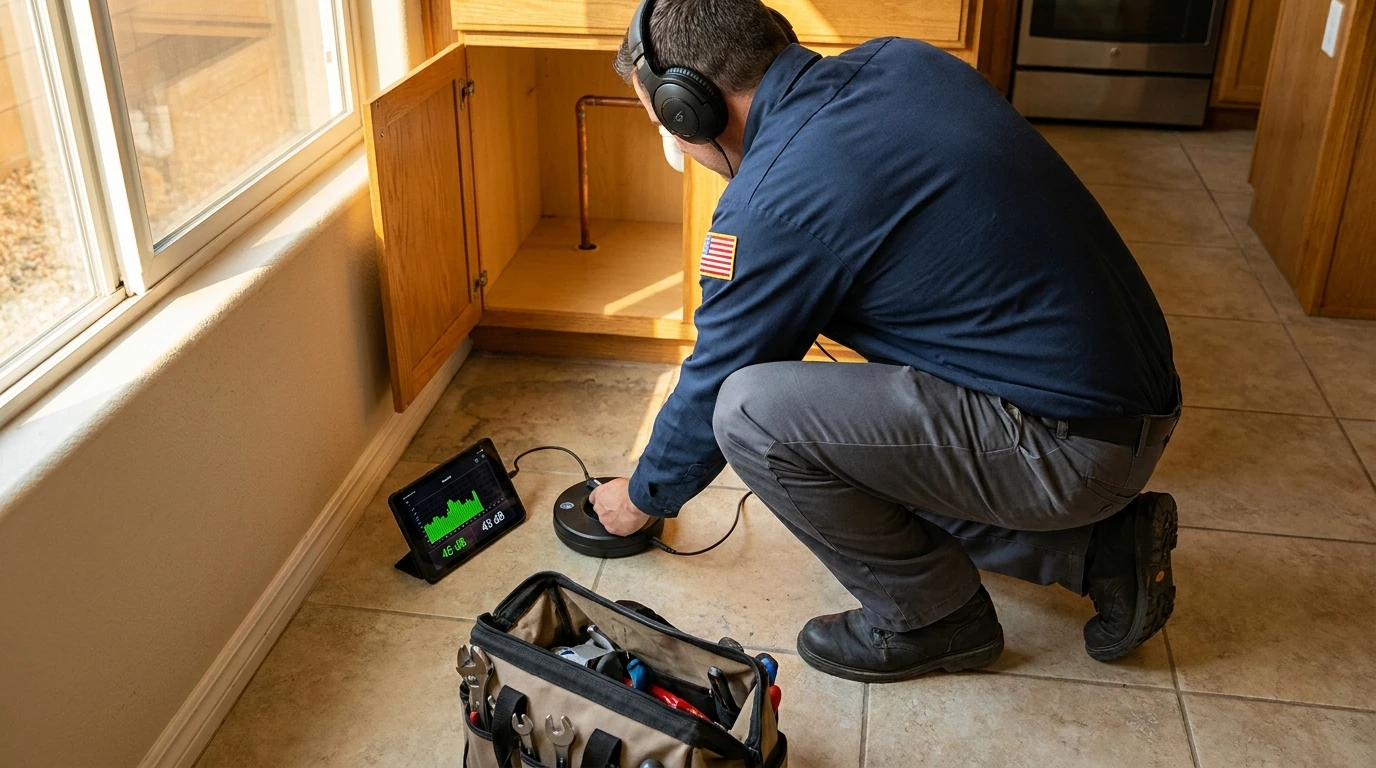
TL;DR: Leak detection in California typically costs $150 to $600 for a standard acoustic or pressure test, and $400 to $900 when a slab leak requires thermal imaging or tracer gas to pinpoint a pipe under a concrete foundation. Price depends mostly on how hard the leak is to reach, which method the job needs, and how many zones have to be isolated and tested. The diagnostic visit and the repair are usually billed separately, so always ask for a written number before work starts.
If your water bill in Corona just jumped and you can’t find a wet spot anywhere, start at the water meter. Shut off every fixture inside and outside, then watch the small leak indicator dial on the meter face. If it’s still spinning with nothing running, water is moving somewhere in your system, and finding exactly where usually means acoustic or thermal equipment rather than tearing into drywall and guessing. Here’s what that diagnostic visit actually costs, what changes the price, and what happens once the leak is pinpointed.
How much does leak detection cost in California?
A standard leak detection visit in California runs $150 to $600, depending on the method and how accessible the leak is. Slab leaks that require thermal imaging or tracer gas to trace a line under a concrete foundation typically cost $400 to $900, since locating a pipe under a slab takes more specialized equipment and more time on site.
A leak behind an easily reached fixture, like a toilet supply valve or a washing machine connection, sits at the low end of that range because the technician can often confirm the source with a simple pressure check. A leak inside a wall cavity or under a slab foundation, common in older Corona neighborhoods near Grand Boulevard and in many South Corona tracts built on slab in the 1980s and 1990s, costs more because it requires equipment that can trace water movement through concrete or framing without opening it up first.
Ask upfront whether the diagnostic fee applies toward the repair invoice if you move forward with the same company. Many plumbers in the region will credit it, but it’s worth confirming in writing before the technician starts.
What makes leak detection cost more or less?
Four things drive the price: how accessible the suspected leak is, which detection method the job calls for, how many zones need to be isolated, and whether the call happens during normal hours or as an emergency dispatch.
- Accessibility. A leak in an exposed garage pipe or under a kitchen sink is quick to confirm. A leak under a slab, inside a finished wall, or beneath a pool deck takes longer and costs more.
- Method required. Acoustic listening is the fastest and cheapest first step. Thermal imaging and tracer gas add cost because they require more setup and a technician trained to read the results correctly.
- Property size and zones. A single-story home with one suspect fixture is a shorter visit than a two-story property where the technician has to isolate the irrigation line, the main, and the interior plumbing separately to rule each one out.
- Timing. An after-hours or weekend call for active water intrusion costs more than a scheduled daytime appointment. RT Olson Plumbing, Heating and Air Conditioning runs 24/7, so emergency dispatch is available, but a scheduled visit during business hours is almost always the cheaper option when the leak is slow rather than active.
What methods actually find a hidden leak?
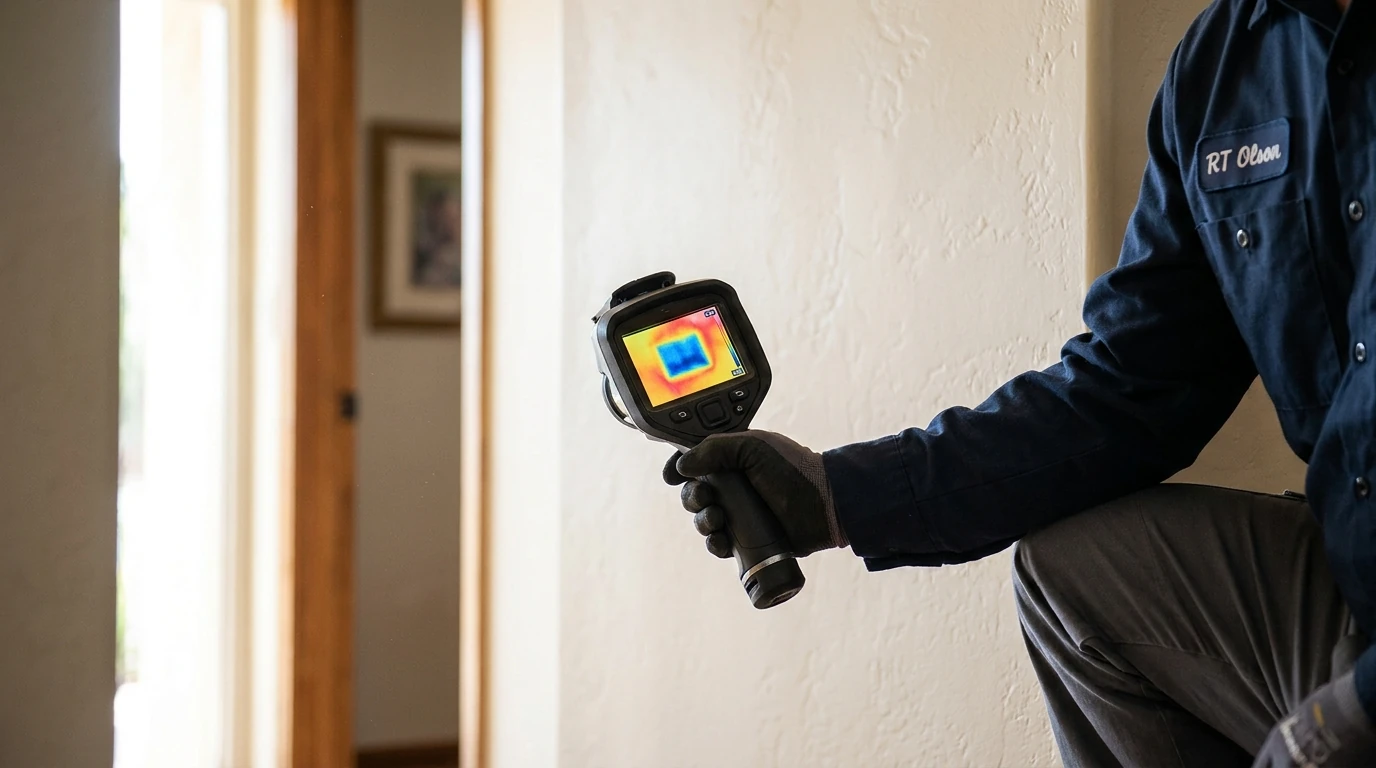
Plumbers choose between acoustic listening, thermal imaging, and tracer gas based on what’s hidden and where it sits. Acoustic equipment amplifies the sound of pressurized water escaping through a pinhole, thermal cameras read temperature differences where water is cooling a slab or wall cavity, and tracer gas is used when a line is too deep or too quiet to hear through concrete or soil.
Acoustic discs placed along the suspected pipe path pick up a distinct hiss that gets louder the closer the listening point gets to the leak. It’s the first tool most technicians reach for because it’s fast and non-invasive. If the sound is too faint, usually because the leak is small or buried deep, a thermal camera can spot the cooler patch where escaping water is drawing heat from the surrounding material. Tracer gas, a mix of nitrogen and hydrogen pushed through an isolated section of pipe, is the fallback when the first two methods don’t give a confident reading; a handheld sensor detects the gas as it escapes through the same crack the water is using.
If you want to run your own first pass before calling anyone, our guide on how to find a water leak in your home’s plumbing walks through the meter test and the visual checks worth doing yourself. The EPA’s WaterSense program also tracks household water waste from undetected leaks, which is a good reminder that a slow leak rarely announces itself with a puddle.
What happens after the leak is found?
Once the technician marks the exact leak location, the repair is priced separately and depends on the pipe material, its depth, and whether it’s an isolated pinhole or a sign of wider corrosion. A spot repair on an accessible line is the cheapest outcome. A slab leak usually means either a localized slab leak and pipe repair that cuts into the concrete at the marked point, or a reroute that runs a new line through the attic or walls and bypasses the slab entirely.
If the leak detection visit turns up more than one failure point, especially in a home with original galvanized or early copper piping, that’s usually the moment a plumber will raise a repiping conversation instead of chasing repairs one at a time. Our post on the 7 warning signs of a slab leak covers how to tell whether you’re looking at an isolated issue or a pattern worth addressing at once. For leaks tied to a drain or sewer line rather than the supply side, a sewer camera inspection is the equivalent diagnostic tool.
Get the leak location and the repair scope in writing before authorizing work, and ask specifically whether the quote includes patching the slab or wall the technician had to open to confirm it. Call RT Olson Plumbing, Heating and Air Conditioning at (951) 344-5596 to schedule a leak detection visit in Corona or request a written quote for the repair once the leak is pinpointed.
About RT Olson Plumbing, Heating and Air Conditioning
This guide was prepared with input from Bob Olson and the RT Olson Plumbing, Heating and Air Conditioning team, a licensed plumbing and HVAC contractor serving Corona, CA since 2014 (license #997337, verifiable through the CSLB license lookup). The company operates from offices in Corona and Anaheim, covers 24/7 service across the Inland Empire and North Orange County, and holds a 4.9 rating across 618 Google reviews.