TL;DR: Most water heater noise comes from sediment, hard-water minerals that settle at the bottom of the tank and trap water against the heating surface. Popping, rumbling, and banging almost always mean sediment. Hissing or a running-water sound usually means a leak. Crackling points to an electrical problem on an electric unit. Knocking and tapping in the pipes are usually water hammer or a check valve, not the tank itself. A flush fixes most of it, but a unit that’s been noisy for years without service may be closer to the end of its life than the noise alone suggests.
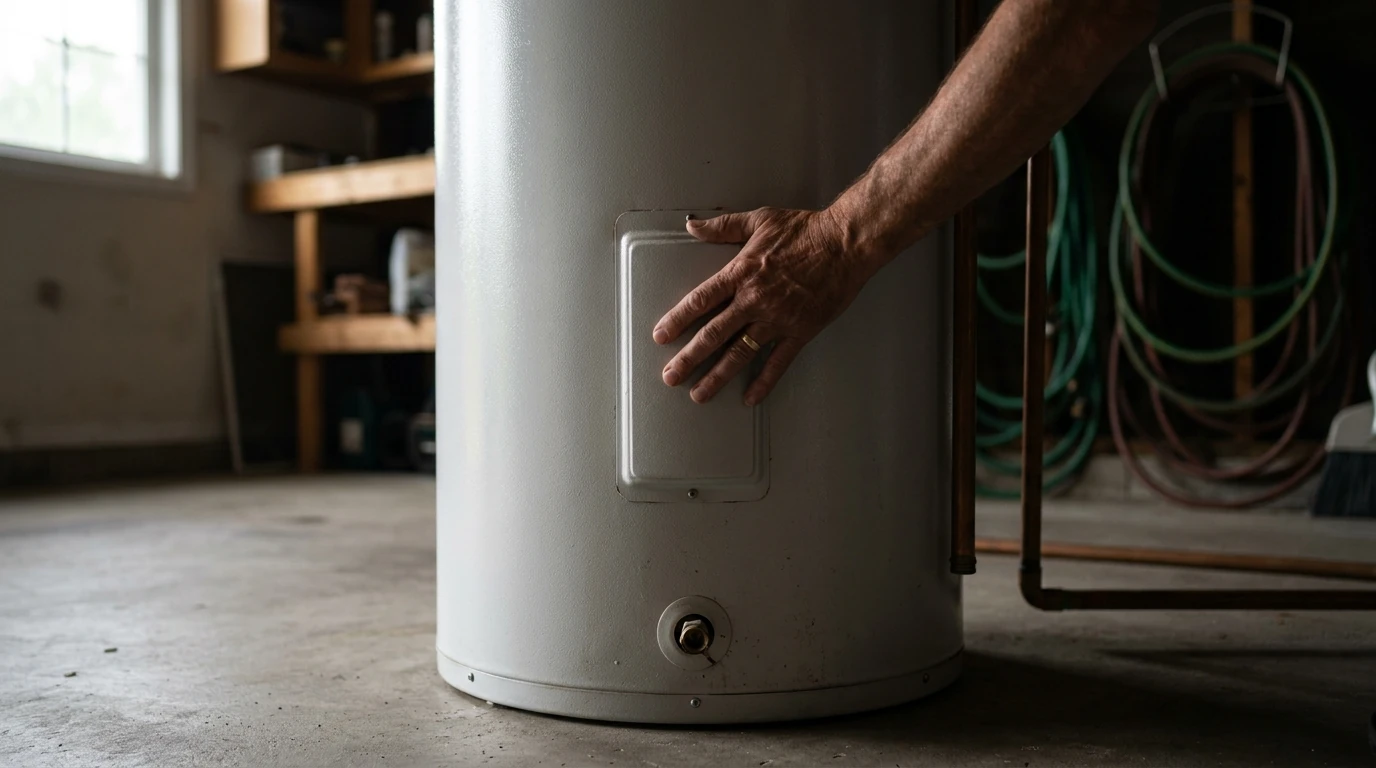
If you’re standing in your garage right now listening to your water heater pop like a coffee percolator, you’re not imagining it and it’s not automatically an emergency. Southern California’s hard water carries the minerals that cause most of these sounds, so they build up faster in homes that never flush the tank. Some background noise is normal, especially on tankless units, and you’ll notice it more if the heater sits in a hall closet instead of the garage. The good news: once you know which sound you’re hearing, you know roughly how worried to be and what to do next.
What does a popping or banging water heater mean?
Popping, banging, or rumbling from a tank water heater almost always means sediment, calcium and magnesium minerals from hard water that have settled on the bottom of the tank. As the burner or heating element fires, water gets trapped under that sediment layer, superheats, and pushes up through it as small steam pockets. Each pocket bursting against the tank wall is what you’re hearing.
Left alone, that sediment layer does more than make noise. It insulates the water from the heat source, which means longer burner cycles and a higher gas or electric bill. It can also cause uneven heating and pressure that harms the tank’s liner over time, and it chips away at how much usable hot water you actually get out of a full tank.
The fix is usually a tank flush: shutting off the cold water inlet and power or gas, draining the tank through the bottom valve, and running fresh water through until it runs clear. We’ve written a full walkthrough of the process here if you want to see the steps before deciding whether to do it yourself or schedule a water heater service. With hard water, plan on flushing every 6 to 12 months. If the tank has gone years without a flush, a light rinse may not be enough, and a full descale or a check of the anode rod might be the better call.
What does a bubbling or rumbling water heater mean?
Bubbling and rumbling come from the same cause as popping: sediment and limescale on the bottom of the tank. As the water heats, steam bubbles form under the sediment and burst, and that is the sound. A descaling agent can dissolve the mineral deposits, but with heavy buildup it is often better to drain and flush the tank completely.
There is one less common cause worth knowing: high alkalinity in the water can break down an aluminum anode rod. If that is what’s happening, a plumber can replace it with a magnesium anode rod.
Is a hissing sound or running water a leak?
Yes, in most cases. A hissing sound, or the sound of water running when every fixture in the house is off, points to water escaping somewhere it shouldn’t: a loose fitting, a cracked tank, or a temperature and pressure (TPR) relief valve that’s stuck open or venting too often.
If you hear this, shut off the cold water supply to the heater, avoid using hot water, and check the unit and its connections for visible moisture or steam. A TPR valve that releases a small amount of pressure occasionally is doing its job; one that’s hissing continuously, or a tank that’s visibly wet at a seam, is not something to wait out. That’s a call-a-plumber-today situation rather than a flush-it-yourself one, since a cracked tank means the unit is likely near the end of its service life either way.
What about crackling or buzzing, are those electrical?
Crackling from an electric water heater can mean there’s an electrical problem with the unit. Electricity and water don’t mix: contact between them can cause a fire or a shock, so this is not something to troubleshoot casually.
If you hear crackling along with another sound, like splashing, turn off the water and the breaker to the water heater before doing anything else, then call for service. A buzzing or vibrating sound, on the other hand, is usually just water moving past a loose heating element; it’s an easier fix, often just tightening the element in place, but it’s still electrical work best left to a licensed technician given the voltage involved.
Why does my water heater knock or tap when water runs through it?
Knocking is usually water hammer, the sound of pipes shifting or banging against a wall or joist when a valve closes quickly and stops the flow of water all at once. Tapping or ticking more often comes from the check valves or heat traps installed on newer water heaters, which click as water expands and contracts while heating.
Water hammer isn’t dangerous in the short term, but over months and years it can loosen pipe straps and stress fittings. Insulating exposed pipe runs or having a water hammer arrestor installed near the noisy valve usually quiets it down. Tapping from a heat trap is typically harmless and just part of how the unit regulates flow direction; if it bothers you, the trap itself can be swapped.
When does a noisy water heater mean it’s time to call a professional?
Call a plumber when the noise is tied to a leak, electrical crackling, or an older unit that’s still noisy after a flush. At that point you’re not troubleshooting a sound anymore, you’re deciding whether the unit is worth repairing.
A technician can pull the anode rod, check the element or gas control valve, pressure-test the TPR valve, and tell you honestly whether a flush and a repair solves it or whether the tank’s age makes replacement the better math. Age is the most common reason of all: as a unit gets older, rust and sediment build up inside and the rumbling and clicking get worse. If your water heater is older and the popping has been going on for a while despite flushing, it’s worth reading through how long a water heater typically lasts and when repair stops making sense before you spend money on a unit that’s close to the end anyway.
A water heater that’s quiet one day and rumbling the next hasn’t necessarily failed, but it is telling you something about the water running through it and the minerals sitting in the tank. RT Olson Plumbing, Heating and Air Conditioning handles water heater diagnostics, flushes, and repairs across Corona and the surrounding Inland Empire, and a straightforward inspection usually tells you which of these sounds you’re actually dealing with.
If the noise is accompanied by a leak, a burning smell, or you’re just not sure which category it falls into, call RT Olson Plumbing, Heating and Air Conditioning at (951) 344-5596 and describe what you’re hearing.
About RT Olson Plumbing, Heating and Air Conditioning
RT Olson Plumbing, Heating and Air Conditioning has served Corona, CA and the surrounding Inland Empire since 2014, holding California contractor license #997337 (verify any contractor’s license at cslb.ca.gov). The company offers 24/7 service and holds a 4.9-star Google rating across more than 600 reviews. This guide first ran on RT Olson’s previous website and was updated for Corona homeowners in October 2026.