
TL;DR: If your water bill jumped without a clear reason, or the water meter outside your house keeps turning after every fixture and irrigation valve is off, you likely have a hidden leak. A licensed plumber’s leak detection visit uses acoustic listening equipment, thermal imaging, and a static pressure test to pinpoint the leak’s exact location, usually without cutting into drywall or concrete first, so whoever does the repair knows exactly where to open things up.
If the meter outside your Anaheim home is still turning even though every faucet, toilet, and irrigation valve is shut off, you have a leak somewhere between the meter and your fixtures, and it’s worth finding before it reaches your next bill or your foundation. Maybe you’ve noticed a warm patch on the tile floor near the kitchen, or your last water bill climbed with no new fixtures or irrigation changes to explain it. Either way, the question isn’t whether something is wrong. It’s who actually has the equipment to find it without tearing out your flooring just to look.
What are the signs of a hidden water leak in your home?
The three most reliable signs are a water meter that keeps moving after every fixture is off, a water bill that rises with no clear cause, and a warm or damp spot on an otherwise dry floor or wall. Any one of these alone is worth a look; two or more together almost always mean an active leak.
To check the meter yourself, shut off every faucet, toilet fill valve, ice maker, and irrigation zone, then find the small leak indicator dial or triangle on the meter face. If it’s still spinning after ten minutes with nothing running, water is moving somewhere in the system. A warm spot on tile or hardwood, especially one that doesn’t track with sun exposure, usually points to a hot water line leaking under the slab, since the escaping water warms the concrete and the flooring above it. For the full step-by-step version of this test, see our guide on how to find a water leak.
A musty smell in one room, a drop in water pressure at a single fixture, or soft spots in drywall are secondary signs worth mentioning to whoever comes out, even if they seem minor on their own.
Should you shut off the water main before the plumber arrives?
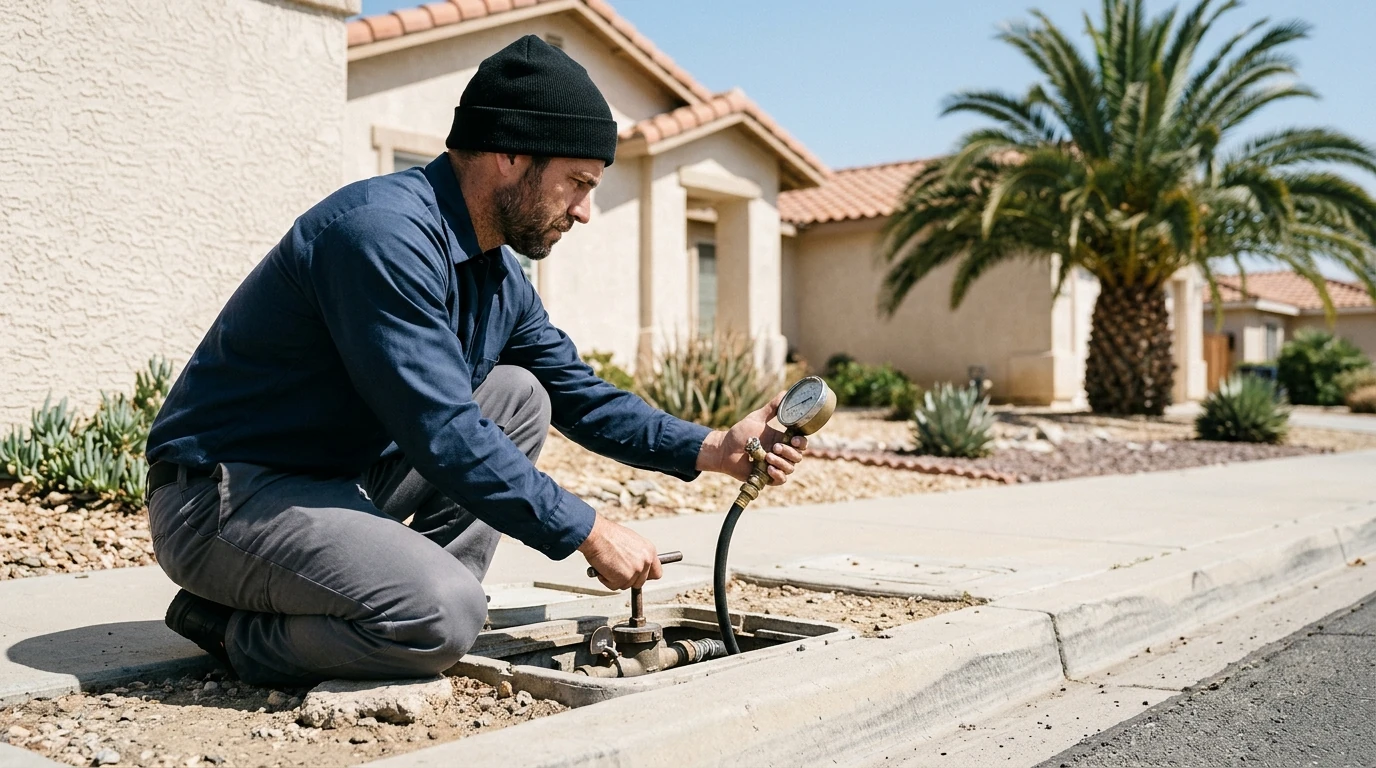
Shut off the main only if the leak is active and visible, such as water pooling under a sink or spraying from a fitting, not for a suspected slab or wall leak you can’t actually see. For a visible, running leak, close the main shutoff at the house or the key valve inside the meter box at the curb to stop damage from spreading while you wait.
For a hidden leak you only found through the meter test or a rising bill, there’s usually no need to shut off the main before the appointment. The flow is typically slow, and a technician running a static pressure test actually needs the line pressurized to measure how fast it’s dropping. Shutting the main off beforehand can mask the very symptom they’re testing for. If you’re unsure which situation you’re in, it’s reasonable to call first and ask.
Is it a slab leak, or a leak inside a wall or ceiling?
A slab leak is a leak in a supply or drain line running beneath your home’s concrete foundation, while a wall or ceiling leak sits inside a stud bay or joist cavity above grade, and the two call for very different access and repair work. Getting this distinction right before anyone starts cutting saves a lot of unnecessary demolition.
Slab leak signs include a warm floor spot, the sound of running water when nothing is on, cracking or lifting in tile or vinyl flooring, and sometimes a faint mineral or musty smell rising through the slab. Wall or ceiling leaks show up as bubbling or peeling paint, a visible stain that grows after rain or after a shower runs, or drywall that feels soft to the touch. Our full rundown of symptoms is in 7 warning signs of a slab leak.
Much of Anaheim’s older housing stock, especially the flatland tracts built up around the original Disneyland boom and near Angel Stadium, went in slab-on-grade with copper supply lines in the 1950s and 60s. Copper holds up well, but after six or seven decades in the ground, pinhole leaks from pitting corrosion become more common, which is one reason slab leaks turn up more often in those older neighborhoods than in the comparatively newer hillside homes of Anaheim Hills.
What happens during a professional leak detection visit?
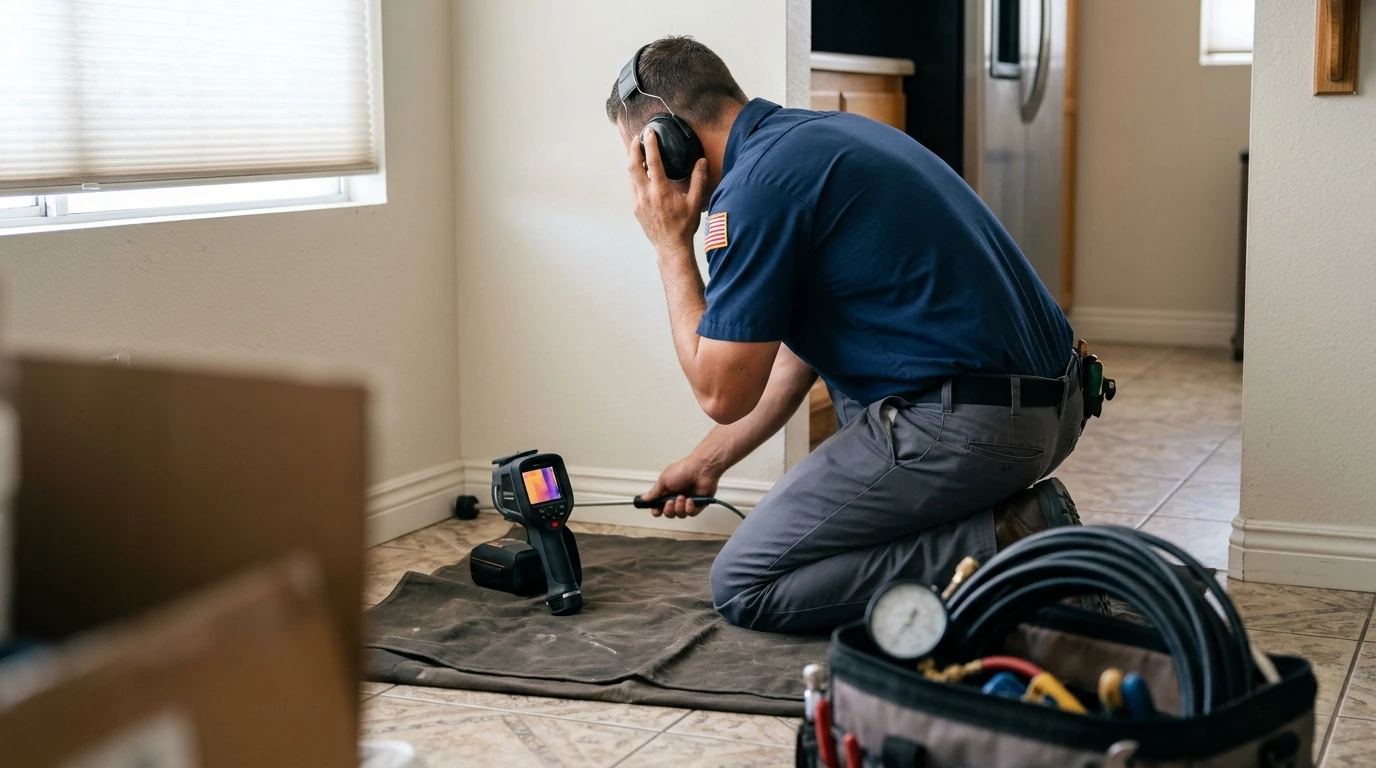
A professional leak detection visit combines a static pressure test to confirm a leak exists somewhere in the system, acoustic listening equipment to narrow down its general location, and usually thermal imaging to pinpoint the exact spot before anyone opens a wall or floor. The goal is to find the leak with the smallest possible hole.
The pressure test isolates sections of the plumbing and watches a gauge for a drop over several minutes, confirming the leak is real and roughly which zone it’s in. From there, acoustic sensors pick up the faint sound of pressurized water escaping through a pinhole, even through concrete, and a thermal camera reads the temperature differential a hot water leak creates on a floor or wall surface. Together these narrow a search from “somewhere in the house” down to a spot you can mark with chalk. A dedicated leak detection visit from RT Olson Plumbing, Heating and Air Conditioning uses all three methods rather than guessing and cutting exploratory holes.
What are your repair options once the leak is found?
Once the leak’s location is confirmed, you generally have three options: a spot repair that opens just the damaged section, a reroute that runs new line around the slab instead of back through it, or, in older homes with several leak-prone sections, a full repipe. Which one makes sense depends on the pipe’s age and how isolated the problem is.
A single pinhole in an otherwise sound copper system usually calls for a spot repair: cutting out the bad section and pressing or sweating in a new coupling. If the same line has leaked more than once, or the home’s copper or galvanized piping is original to a 1950s or 60s build, a reroute or repipe often costs less over time than repeated slab cuts. Slab leak and pipe repair covers how each option is scoped and priced; for a general sense of what leak detection diagnostics run before repair, see leak detection cost in California.
If the leak has already damaged flooring or drywall, photograph it before repair work starts. Sudden, accidental water damage is often covered under a standard homeowners policy, while damage from a slow leak that went unaddressed for months typically isn’t; the Insurance Information Institute’s guide to what standard homeowners insurance covers breaks down that distinction in more detail.
If you’re standing in your Anaheim kitchen right now looking at a warm floor spot or a meter that won’t stop spinning, the next step is getting someone out with the right equipment before more flooring or drywall gets damaged. Call RT Olson Plumbing, Heating and Air Conditioning at (951) 344-5596 to schedule a leak detection visit, or request one through our Anaheim leak detection page.
About RT Olson Plumbing, Heating and Air Conditioning
RT Olson Plumbing, Heating and Air Conditioning is a licensed plumbing, heating, and air conditioning contractor (California CSLB License #997337, verifiable through the CSLB license lookup tool) founded in 2014, serving Corona and the wider Inland Empire and Orange County area from offices in Corona and Anaheim. The company operates on a 24/7 basis and carries a 4.9-star Google rating across more than 600 reviews, handling leak detection, slab leak repair, water heaters, drains, and HVAC service across the region.
Video Transcript
Did your water bill jump for no reason, or does your meter keep spinning after every faucet and irrigation valve is off? A warm patch on your tile floor, a musty smell, or a sudden pressure drop at one fixture can all signal a hidden leak. If you see water pooling under a sink or spraying from a fitting, shut off the main valve right away to limit damage. For a hidden leak behind a wall or under the slab, leave the water on, your contractor needs pressure to test for it. Is the leak under your slab, or is it hiding inside a wall or ceiling? Each situation calls for a very different repair approach. Many older Anaheim homes built in the 1950s and 60s have copper pipes that develop pinhole leaks after decades underground. Your contractor starts with a static pressure test, isolating sections of pipe to confirm a leak is really there. Acoustic listening equipment and thermal imaging then pinpoint the exact spot, often without cutting into your drywall or concrete first. Once the leak is found, your contractor can discuss a spot repair, a reroute around the slab, or another targeted fix. Don’t wait for a small leak to become a big repair. Call RT Olson Plumbing, Heating and Air Conditioning at (951) 344-5596 to schedule an assessment.