Attic Insulation in Corona
Attic insulation in Corona and surrounding areas. Licensed and insured plumbing and HVAC pros, upfront pricing, free estimates. Call (951) 344-5596.
If your air conditioner runs constantly through a Corona summer and the house still feels warm by late afternoon, the problem may not be the AC at all — it may be the attic above it. On a hot Inland Empire day an under-insulated attic can climb past 130°F, and that heat pushes straight down through the ceiling into your living space, making the air conditioner fight a losing battle. Attic insulation is one of the highest-return comfort and efficiency improvements a home in this climate can make, and it works hand in hand with the HVAC system rather than competing with it: the better the attic holds heat out, the less the AC has to run.
What attic insulation actually involves
Attic insulation work is more than blowing material into the space until it looks full. The job starts with an assessment of what is already there — the type, the depth, the condition, and whether it is dry and clean or contaminated. Corona is in California Climate Zone 10, where the recommended attic insulation level is roughly R-38 to R-49, and many older homes in the area sit well below that at R-19 or less. Bringing an attic up to the recommended R-value is where most of the energy and comfort benefit comes from.
The most common material for topping up an attic is blown-in insulation, either cellulose (recycled paper treated for fire and pest resistance) or fiberglass, installed to an even depth across the attic floor to reach the target R-value. Which material fits depends on the attic’s condition and air-sealing situation rather than one being universally better.
Two other steps separate a real insulation job from a spray-and-leave. The first is air sealing: before or alongside adding insulation, the gaps that leak conditioned air — around recessed lights, plumbing and wiring penetrations, the attic hatch, and top plates — are sealed, so the insulation performs to its rating instead of covering an active air leak. The second is dealing honestly with contaminated existing insulation. Material that is soaked from a roof leak, soiled by rodents, or harboring mold should be removed and disposed of, the space cleaned and sealed against re-entry, and fresh insulation installed — not buried under a fresh layer that traps the problem.
Our process
-
Attic assessment. We measure the existing insulation depth and R-value, identify the material already in place, and check its condition — dry and clean, or wet, moldy, or rodent-soiled. We also note the air-leakage points and any ventilation issues. This determines whether the job is a straightforward top-up or a removal-and-replace.
-
Removal and cleanup when needed. If the existing insulation is contaminated — water-damaged, moldy, or soiled by rodents — we remove and dispose of it properly, clean and sanitize the space, and seal the entry points that let the pests or moisture in. Adding new material over contamination just seals the problem inside the attic.
-
Air sealing. We seal the penetrations that leak conditioned air — can lights, plumbing and electrical chases, the attic hatch, and top plates — so the new insulation works against a sealed surface rather than a constant air leak. This step is where a lot of the real energy benefit is won or lost.
-
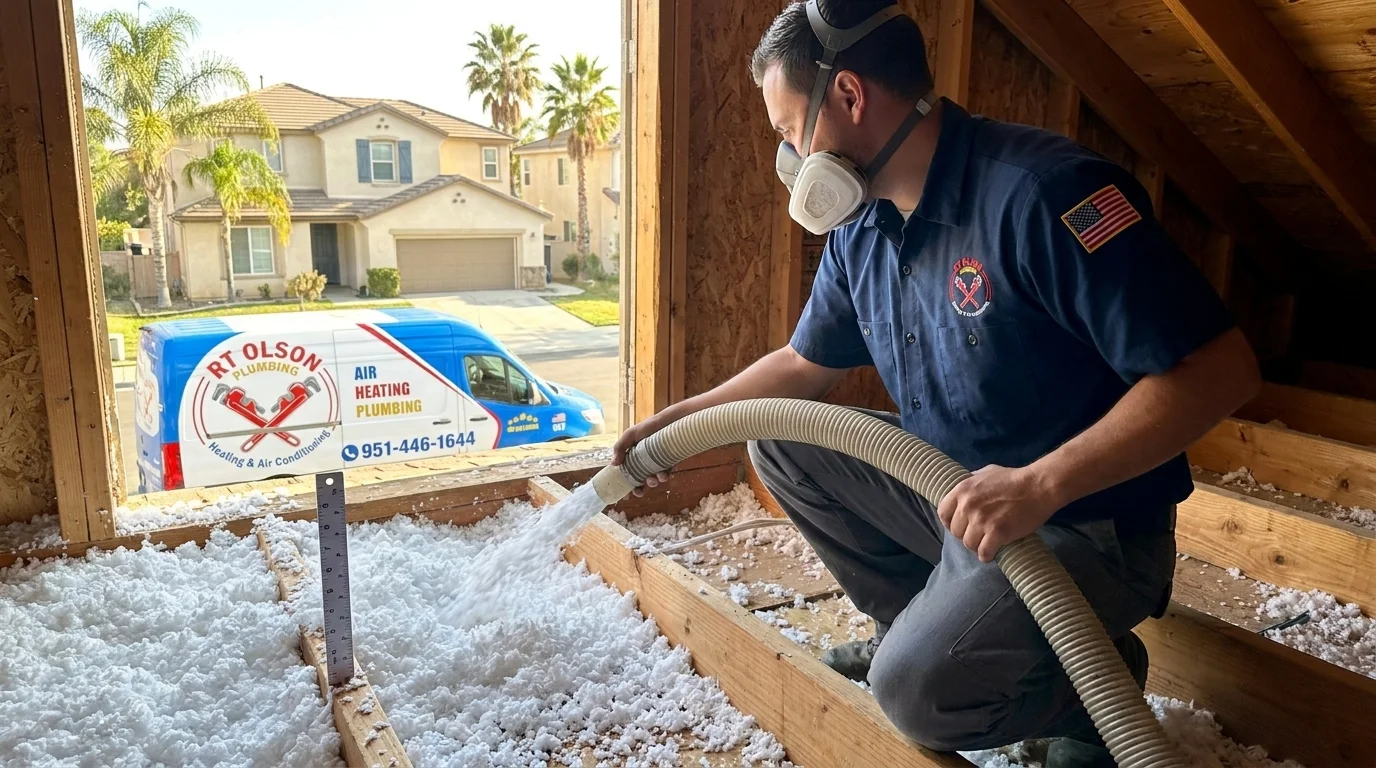
Blown-in installation to target R-value. We install blown-in cellulose or fiberglass to an even depth across the attic floor, bringing the space up to the R-38 to R-49 range recommended for this climate zone, while maintaining proper clearance at eave vents and around any heat-producing fixtures.
-
Verification. We confirm consistent coverage and depth across the attic, check that ventilation baffles and clearances are intact, and document the material and installed R-value so you have a record of what was done.
What separates a good attic insulation job from a bad one
The most common shortcut is skipping air sealing and just adding depth. More insulation over unsealed penetrations still lets conditioned air escape and hot attic air infiltrate; the material looks impressive but underperforms. A quality job seals the leaks first so the insulation does its job.
The second is burying contamination. It is faster and cheaper for an installer to blow new insulation over rodent-soiled or water-damaged material than to remove it, but that traps droppings, moisture, and odor in the attic and can create a health and mold problem. An honest assessment checks the condition of the existing insulation before recommending a simple top-up.
The third is uneven coverage and blocked ventilation. Insulation blown carelessly can pile deep in the center and thin at the edges, or clog the eave vents that the attic needs to breathe, which traps moisture. Consistent depth to the rated R-value, with ventilation clearances preserved, is what turns the right amount of material into the right performance.
What does attic insulation cost?
Cost depends on the size of the attic, the target R-value, the material chosen, and whether contaminated insulation has to be removed first. Most homeowners fall somewhere in the ranges below; these are typical market figures, not RT Olson Plumbing, Heating and Air Conditioning quotes.
| Scenario | Typical range |
|---|---|
| Blown-in insulation top-up (average attic) | $1,500 - $3,500 |
| Full insulation to R-38 to R-49 (larger home) | $2,500 - $6,000 |
| Attic air sealing (standalone or added) | $350 - $1,500 |
| Removal of old / contaminated insulation | $1 - $2 per sq ft |
| Rodent-soiled insulation removal, cleanup, and reinstall | Quoted per scope |
Every attic is different, and the assessment — existing depth, condition, and air-sealing needs — is what turns these ranges into an accurate scope for your home.
Seasonal and regional considerations
In Corona and the wider Inland Empire, attic insulation is primarily a cooling-season investment. The dominant load here is summer heat, and an under-insulated attic that bakes to 130°F or more all afternoon transfers that heat straight into the living space, driving the air conditioner to run long and hard exactly when electricity is most expensive. Bringing the attic up to the recommended R-value and sealing its air leaks is one of the most direct ways to cut cooling runtime and hold the house comfortable through a Riverside County summer.
There is a real tie-in with the rest of the HVAC system: a home that reduces its attic heat gain often finds its existing air conditioner is suddenly adequately sized rather than overwhelmed, and any future system can be sized to the improved envelope rather than the old, leaky one. Insulation and HVAC are two halves of the same comfort equation.
Service area
RT Olson Plumbing, Heating and Air Conditioning is based in Corona and serves homeowners and property managers throughout the Inland Empire and western Riverside County, including Riverside, Norco, Eastvale, Chino, Jurupa Valley, and Yorba Linda. We handle attic insulation as a comfort and efficiency upgrade that works alongside your heating and cooling system, from a straightforward top-up to full removal and replacement of contaminated material.
If your home struggles to hold temperature, your cooling bills climb every summer, or you suspect your attic is under-insulated or contaminated, call RT Olson Plumbing, Heating and Air Conditioning at (951) 344-5596 to schedule an assessment. Licensed and insured, license #997337.
Services We Handle
- HVAC, Duct Cleaning, Attic Insulation, Heating and Cooling
Frequently Asked Questions
How much attic insulation does a Corona home need?
Which is better for attic insulation, blown-in cellulose or fiberglass?
Do I need to remove the old insulation before adding new insulation?
How does attic air sealing relate to insulation?
Will new attic insulation actually lower my energy bills?
Looking for the best attic insulation company in Corona?
RT Olson Plumbing, Heating and Air Conditioning provides licensed and insured attic insulation in Corona, CA and the surrounding area, and has served local property owners since 2014. Customers rate us 4.9 out of 5 stars across 619 Google reviews. We answer calls 24/7 — call (951) 344-5596 for immediate help.
Need Attic Insulation now?
We respond 24/7 across Corona and surrounding CA cities.