
TL;DR: For leak detection in Corona, CA, call a licensed plumbing contractor that carries acoustic listening equipment, thermal imaging, and pressure-testing gear, not a general handyman or a leak-detection app. A proper visit isolates the plumbing system by zone, locates the leak without blind demolition, and ends with a written estimate for the repair. Expect to pay for the diagnostic visit itself, separate from whatever repair follows.
If your water bill jumped $50 or $60 over last month with no new fixtures running, or you hear water moving somewhere inside a wall when every faucet in the house is off, you have a hidden leak and no obvious way to find it yourself. Corona’s housing stock, a lot of it slab-on-grade construction built from the 1970s through the early 2000s, runs copper and PEX supply lines under a few inches of concrete. That means the leak draining your water bill is usually invisible until someone with the right equipment goes looking for it.
Who do you call for leak detection in Corona, CA?
Call a licensed plumbing contractor that owns dedicated leak-detection equipment, acoustic listening gear, thermal imaging, and pressure-test manifolds, rather than a general contractor or a one-size-fits-all handyman service. Leak detection is a specific skill set separate from general drain or fixture work, and the wrong call usually means unnecessary slab cuts or drywall removed in the wrong spot.
RT Olson Plumbing, Heating and Air Conditioning, licensed under California contractor license #997337 and based in Corona, runs leak-detection calls across the city and the surrounding Inland Empire on a 24/7 basis. You can verify any California plumbing license, including this one, through the CSLB license lookup tool before anyone sets foot in your home, which is worth doing with any contractor you’re considering.
What does a professional leak-detection visit actually involve?
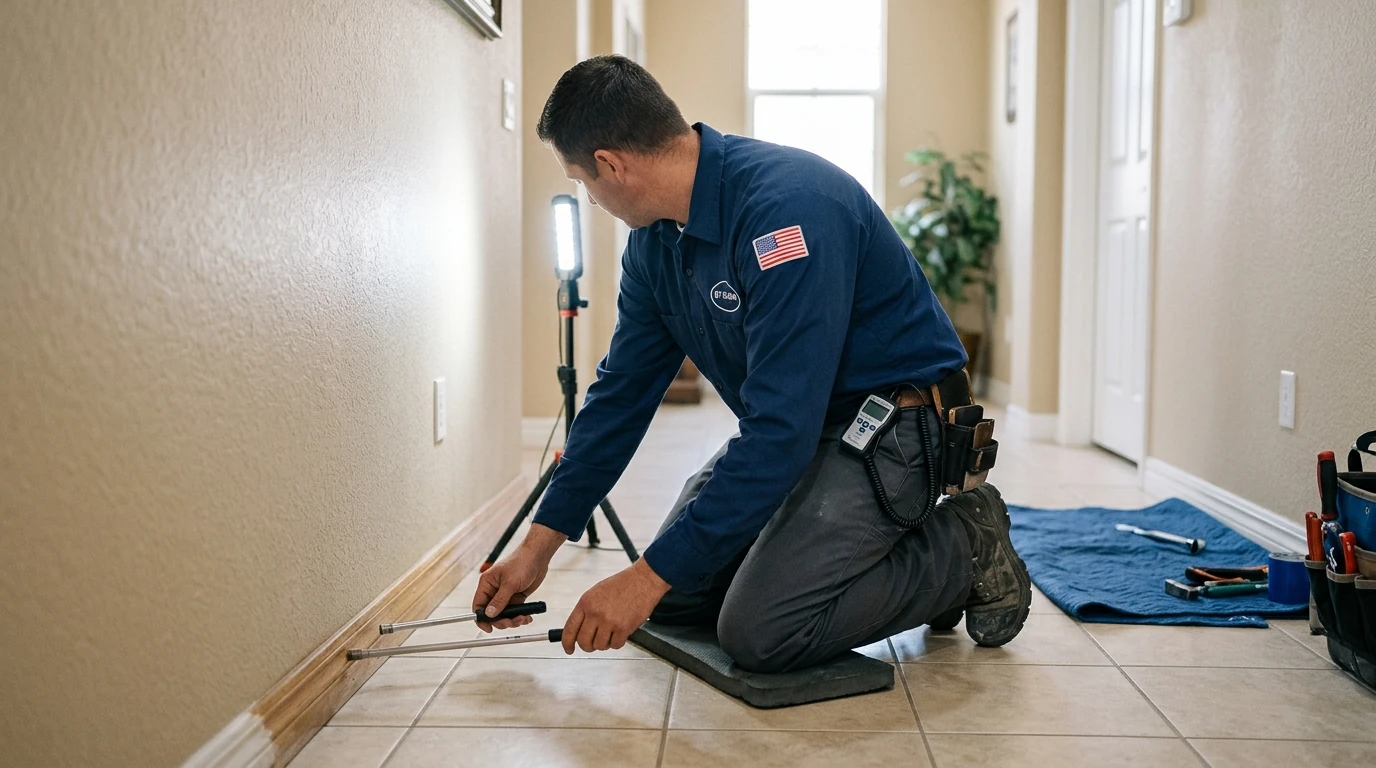
A real leak-detection visit isolates the plumbing system zone by zone, then uses listening and imaging equipment to pinpoint the leak before any cutting starts. The technician isn’t guessing where to dig, they’re narrowing the search methodically.
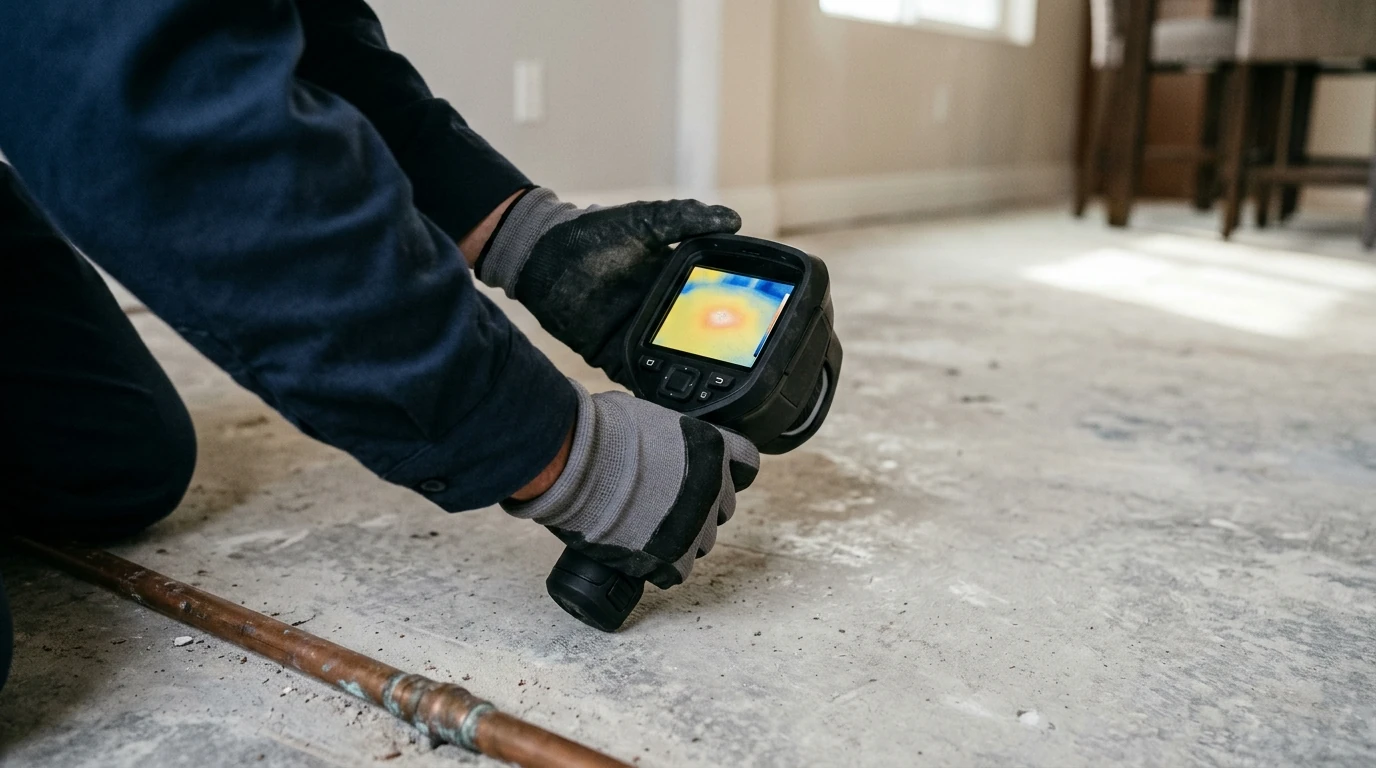
A typical visit looks like this: the technician shuts off fixtures one group at a time and watches the water meter to confirm whether the leak is on the supply side or the drain side. From there, acoustic listening rods pick up the distinct hiss of pressurized water escaping underground or inside a wall cavity, since a pressurized leak sounds different from a gravity drain leak. A thermal camera can flag a cooler patch on a slab floor where water is wicking through concrete. For suspected toilet leaks, a dye tablet dropped in the tank settles the question in ten minutes, if color shows up in the bowl without a flush, the flapper is leaking.
If you want the longer walkthrough on reading your own meter and narrowing the search before calling anyone, this step-by-step guide to finding a water leak covers the homeowner-side checks.
What are the warning signs that point to a hidden leak?
A sudden jump in your water bill with no change in household water use is the single most reliable sign of a hidden leak. Compare two or three recent bills side by side; a steady upward creep with no explanation (no new pool, no extra houseguests) points to a leak somewhere in the system.
Other signs worth acting on:
- A hissing or trickling sound inside a wall or under the floor when every fixture is off
- A warm spot on an otherwise cool slab floor (often a sign of a leaking hot-water line)
- Water pooling at the base of a wall with no visible source, or a stretch of unusually green grass in an otherwise dry yard
- A water meter dial that keeps spinning after you’ve shut off every fixture in the house
Any one of these on its own is worth a diagnostic visit. If you’re also noticing cracked tile, a sloped floor, or a mildew smell near the slab, read through the warning signs of a slab leak, since those point to a more advanced version of the same problem.
How much does a leak detection visit cost, and what happens next?
A standalone leak-detection diagnostic in the Corona area is a separate line item from the repair itself, and the price depends on how long the search takes and what equipment is needed. This cost guide breaks down the current price ranges by method, acoustic listening versus thermal imaging versus a full pressure test.
Once the leak is located, the technician should give you a written estimate before any repair work starts, including whether the fix is a simple spot repair, a reroute around the damaged section, or, for an older home with repeated leaks, a case for whole-house repiping. A conservative approach to Corona’s hard water and aging galvanized or early-generation copper lines is to fix the immediate leak first and discuss repiping only if the same line has failed more than once.
If water has already spread beyond the pipe itself, soaked flooring, drywall, or baseboards, that part of the job moves from leak repair to water damage mitigation, which is outside a plumber’s scope. Check with your homeowners insurer about coverage for sudden, accidental water damage, and separately whether your policy requires a water-backup endorsement if the leak originated from a drain line rather than a supply line.
Finding the leak is the first step; stopping it for good is the one that actually saves you money. Call RT Olson Plumbing, Heating and Air Conditioning at (951) 344-5596 to schedule a leak-detection visit in Corona, or request a written estimate before any repair begins.
About RT Olson Plumbing, Heating and Air Conditioning
Founded in 2014 and based in Corona, CA, this plumbing, heating and air conditioning contractor holds California contractor license #997337, which can be verified through the CSLB. The company operates 24/7 and carries a 4.9 Google rating across more than 600 reviews, with crews handling leak detection, water heaters, drain and sewer work, and HVAC service across Corona, Riverside, and the surrounding Inland Empire.